Who cuts the cake

Ravi and Sana had one cake to share. Ravi held the knife. He cut it in two and said, “Equal.”
Sana looked at the two slices. One looked bigger. “You cut it, and you also decided,” she said. “That is not fair.”
Ravi was hurt. He had tried to be fair. He is not a cheat.
Meera watched from the next desk. She noticed something. The argument was not about the cake. It was about who decided.
Nobody had to ask whether Ravi was honest. The knife just moved.
The idea
Put the cake away and look at the shape. Two people are in a case. One of them decides it. The other one does not accept it, however honest the first one is.
People who study rules say it in three words.
The idea
Mechanisms beat intentions.
A mechanism is a rule for how a thing gets decided. The knife goes to someone who eats no cake. That rule gives the same slices whoever Ravi and Sana are. It works whoever is on which side.
An intention is what a person means to do. Ravi meant to be fair. But an intention lives inside one person. Sana cannot see it. Nobody can check it from outside. That is the trouble with an intention. Even a true one cannot be shown.

Meera’s sheet
What Ravi means To be fair.
What anyone can check Who held the knife. Who ate the cake.
Two old rules
So the first rule is old and short. No one decides their own case. If the case is about you, you do not decide it. Someone outside the case does. That is why Aditi cuts.
The second rule is just as old. Hear the other side. Before anyone decides, both sides speak.
A decision made after one side has spoken is not accepted by the other side. Not because the decider is bad. Because the other side was never asked.
That went wrong with the cake too. Ravi said “equal,” and that was that. Nobody had asked Sana what she saw.
What people believe instead
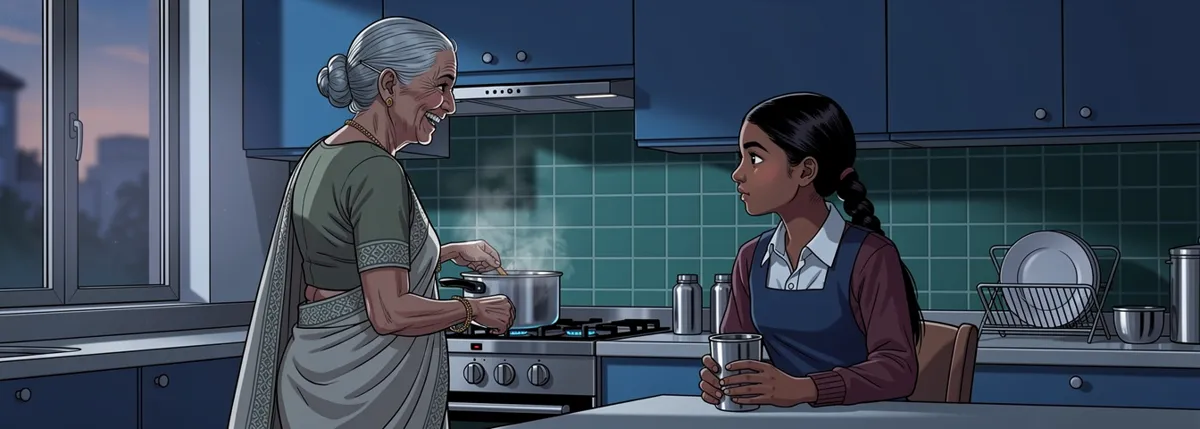
Meera told her Nani about the cake. Nani laughed. “Ravi is a good boy. A good person does not need rules. Good people are enough.”
Ravi really was good; he shared often.
Meera did not argue. She thought about Sana. Sana could not see inside Ravi. A good person and a person doing a favour look the same from outside. The rule is there so nobody has to guess. It protects Ravi too.
That night she added a line to her sheet. Under what a person means: Ravi is good. Under what anyone can check: who held the knife.

Her Chacha had the opposite view. “Rules, rules, rules. Files and forms. Pick an honest person and let him decide.”
Their neighbour, once picked, had judged fairly.
Meera nodded, and thought about the knife. The rule was one step: give the knife to someone who eats none. After that there was nothing left to argue about. The steps did not slow the fairness down. The steps were the fairness.
The same idea, in the classroom

Farhan is class monitor. He made the seating chart. His three friends got the window seats.
“He is helping his friends,” said the back row. “I am not,” said Farhan, and he meant it.
Look at the picture. Farhan is in the class, and Farhan decides the class’s seats. He is inside his own case. Verma sir took the chart, and the shouting stopped.
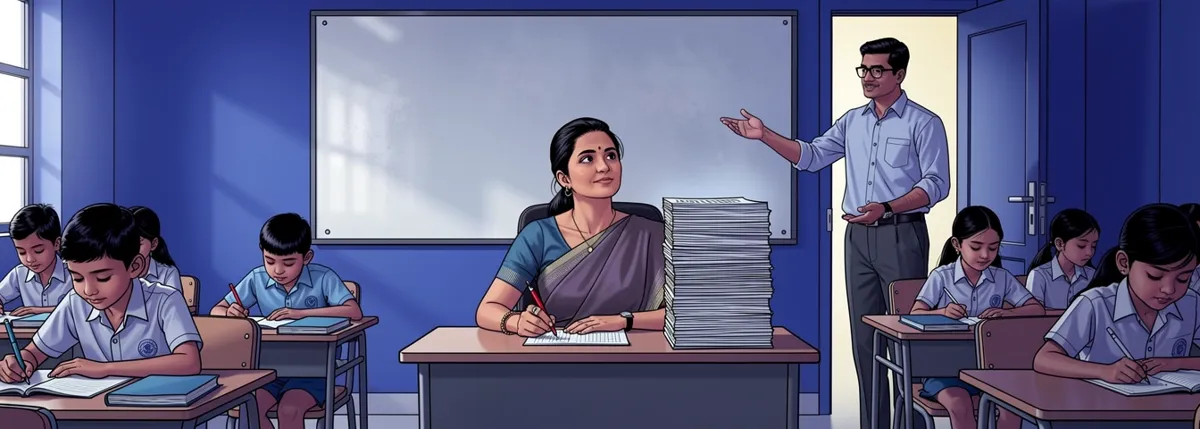
Sharma ma’am teaches Class 6, and her son Aman is in it. She is not allowed to grade his exam paper. Gupta sir grades it.
She could grade it honestly. Everyone knows that. The rule is not about whether she would be fair. It is about whether anyone checking later could tell an honest mark from a favour. Nobody could. So the paper moves.
Spot it
Two new situations. Which one idea explains both?
1
The captain picks the two teams for Friday’s match. The captain is also playing. Her team has the four best players.
2
Two brothers share a room. The older one made the rule for who gets the bed under the fan. He gets it.
Look for the shape. In both, the one who decides is inside the case. The captain plays in the match she picked. The brother sleeps in the bed he chose.
Before you say who is right, ask one question. Would this rule still be fair with the sides swapped? If yes, keep the rule. If no, move the deciding outside the case, and hear both sides.
This week, at home
Ask someone older about a rule at their work for who decides what. Then ask what would happen if that rule were gone.
The name
People who study rules have a name for this: procedure as fairness. A procedure is the steps by which a thing is decided. The word is long, but that is all it means. The name says: the fairness is in the steps, not in the person.
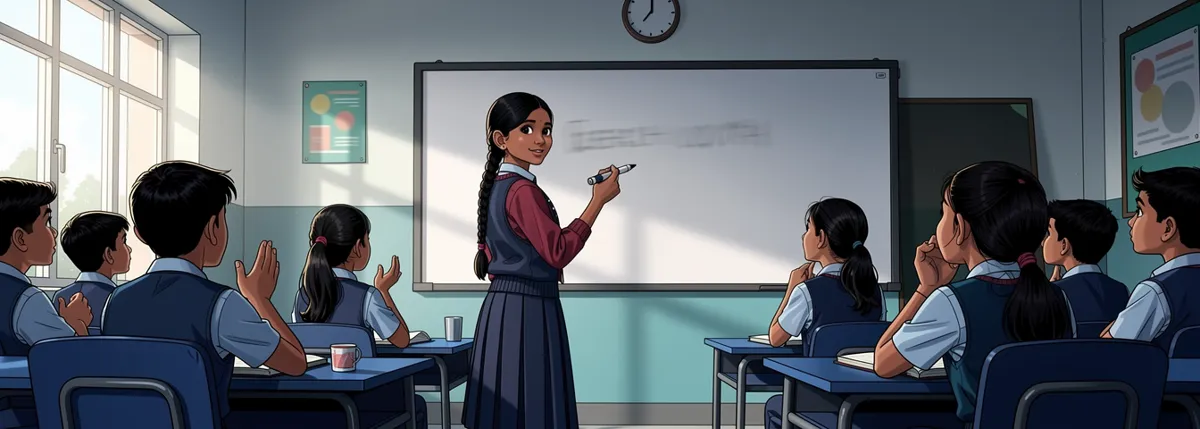
One shape, three costumes. A cake, a seating chart, an exam paper. In each one, the person deciding sat inside the case. In each one, the rule moved the deciding outside, and the argument stopped.
Mechanisms beat intentions. So ask who decides, and whether the case is about them.
Long ago, Emperor Ashoka cut his rules into rock. Anyone passing could read them. Meera wrote the cake rule on the class board.
Where you will see this next
Next chapter: a way to cut so that nobody can envy the other slice, even when the cutter eats. In Class 8 this idea comes back, and you find out why the rule works.