Manthika
The Book Factory
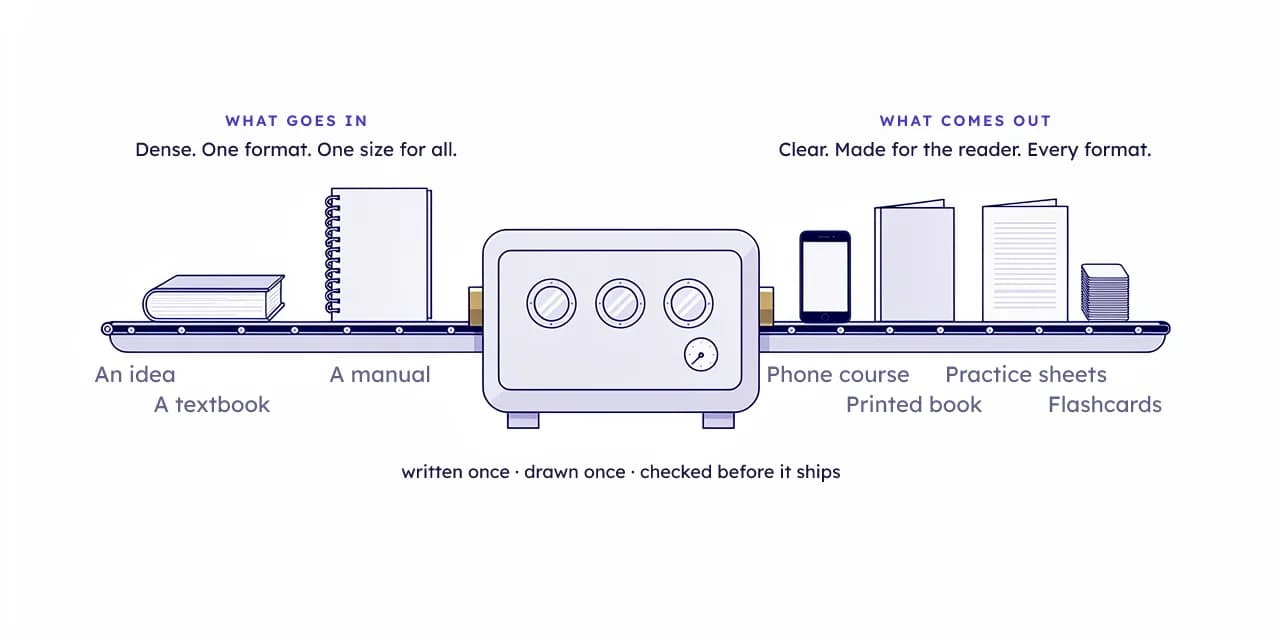
A subject goes in. A printed book, a web chapter, a phone course and practice sheets come out, each made for the person reading it.
Measured from the site’s own files
What a visitor can check today
- 210chapters free to read online, no account
- 3,474questions in those courses
- 86lessons on the phone
- 2languages today — English, and Hindi in 18 chapters
Why: the problem we are solving
Made by experts, read by beginners
Nobody in that chain is a beginner. The expert cannot un-know the subject to read it as a first-time reader does, and the first-time reader is never asked. So the text is correct, and it does not land. This is true whether the knowledge reaches the learner as a book, a course or a video.
How a textbook is made today
- An expert writes itin the order of the subject, at the compression of someone who knows it
- An expert reviews itfor whether it is correct and complete
- A beginner reads itneeding to know the field to understand the field
The beginner is at the end of the chain, and nothing comes back.
How it is made here
- An AI set up for the subject writes the sourceresearched in depth against the subject and the standard texts
- Rewritten for its readerthe thing before its name, the example before the rule, in small steps
- A beginner reads itand is asked, at every step, what they understood
- What they missedcomes back as a change to the text
What readers get wrong rewrites the page
What the expert chain does to a page
The definition comes before the thing.
“A fraction is a quotient of two integers”, before anyone has seen half a roti.
The terms come before the context.
“Coefficient” and “variable” in the first line of algebra, before a single pattern has been noticed.
The general case comes first.
The formula, then “applications”. To a learner the examples are the idea, and the formula is a summary they cannot read yet.
The checks test recall.
The exercises ask the reader to give the text back, which is the only thing an author can check without a reader.
Education has been organised around the people who already know: the expert who writes, the teacher who delivers. What follows is what it looks like organised around the person who does not yet.
Who this is for
Three groups, five doors
Find your group below, then the door built for you.
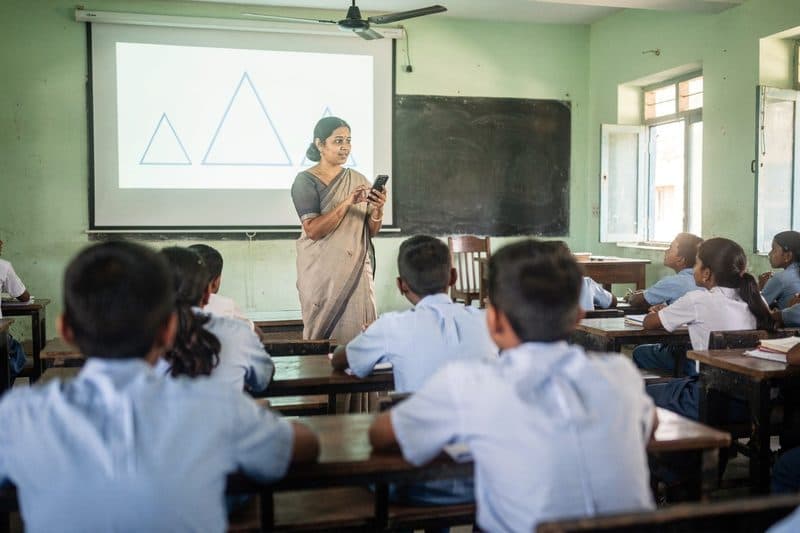
For school
A student working through school, or getting ready for an entrance exam.
- Available now
School and college students
Classes 6 to 12 today. Two college titles land in 2027: drone design and manufacturing for engineers, an MBA for business owners.
- Planned for 2027
Entrance exams
Admission and selection tests after school. NEET and the SSC GD Constable exam are planned for 2027.
For work
A certification, a trade, or running your own business.
- Available now
Professional certifications
AWS Solutions Architect Associate is free today. Other exams have free samples; NISM mutual fund distribution is next, in 2027.
- First books late 2026
Owners, founders and people working for themselves
Starting a trade such as salon work, or running a business, in India: the rules, the money and the decisions, written for the person who decides and pays.
For yourself
Learning something no school ever taught you, for its own sake.
- Planned for 2027
Learning for life
Everyday maths retold for an adult, in Hindi, and English built for a Hindi speaker: both for learning something no school taught you, on your own.
How every page is made
Made once, in every form
Each subject is written and checked once, then turned into a book, a web page, a phone course and practice sheets from that same source.
Written for whoever is reading it
A school student, a working adult studying for a certification, and someone learning a trade each get writing fitted to where they are, not one dense text for all of them.
Checked against real mistakes
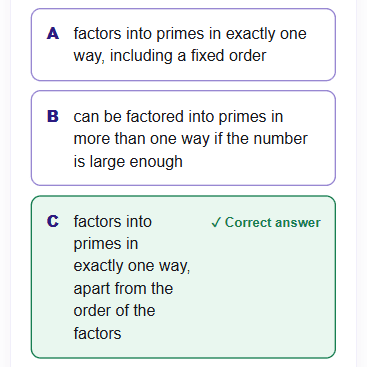
Every practice question is built around a wrong turn a learner is likely to make, so a wrong answer points back to the idea behind it.
How it is made
Six steps, every subject
Every subject goes through the same six steps. The steps are the company; the books and courses are what comes out of them.
Subject
The subject as the board or the exam sets it: what has to be learned, and in what order.
Broken into small pieces
Split into the smallest ideas a reader can learn in a sitting, each checked against the source.
Fitted to the reader
Written for the grade, the language and the pace of the person who will read it.
Laid out
Set into each form a line needs: pages for print, screens for the phone, sheets for practice.
Delivered
A printed book, a web chapter, a course on this site, in the reader’s hands.
Measured
What readers get right and wrong comes back, and changes the next edition from step one.
A real lesson
What a lesson looks like
Other Manthika lines
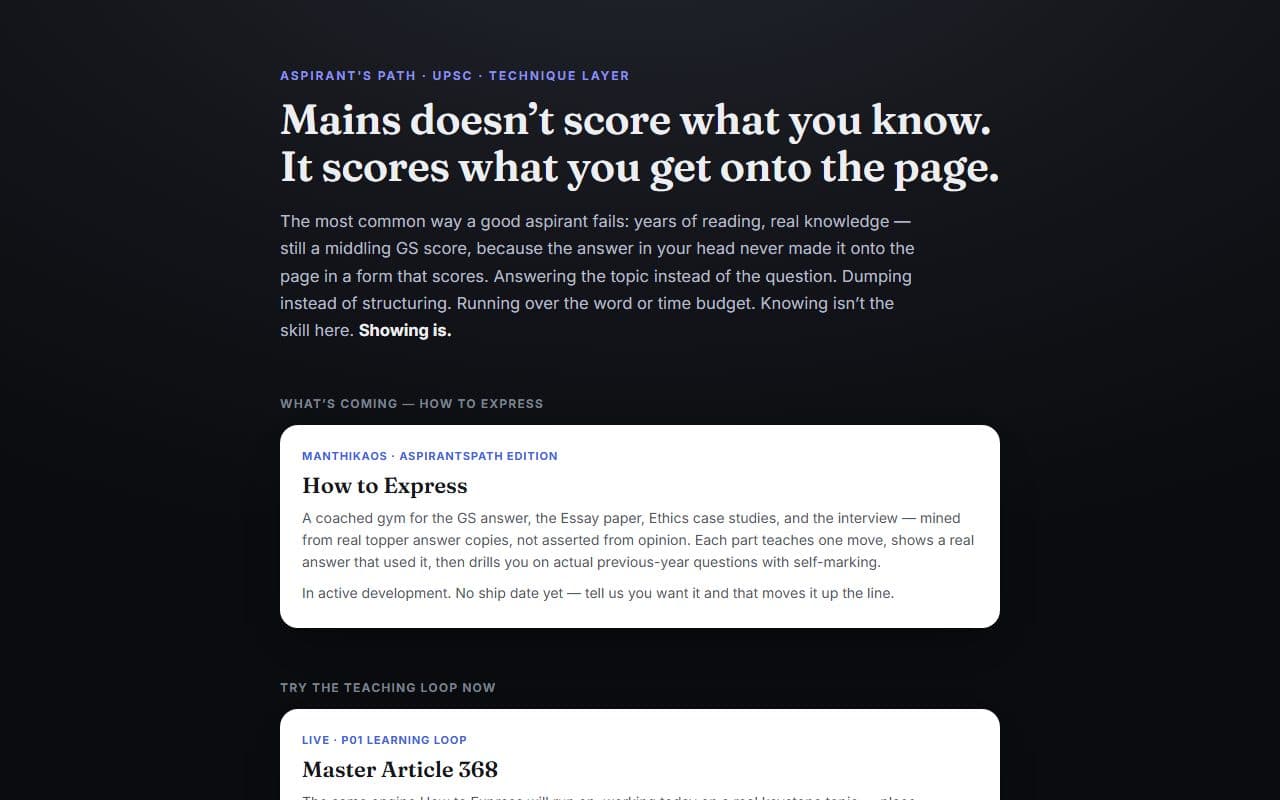
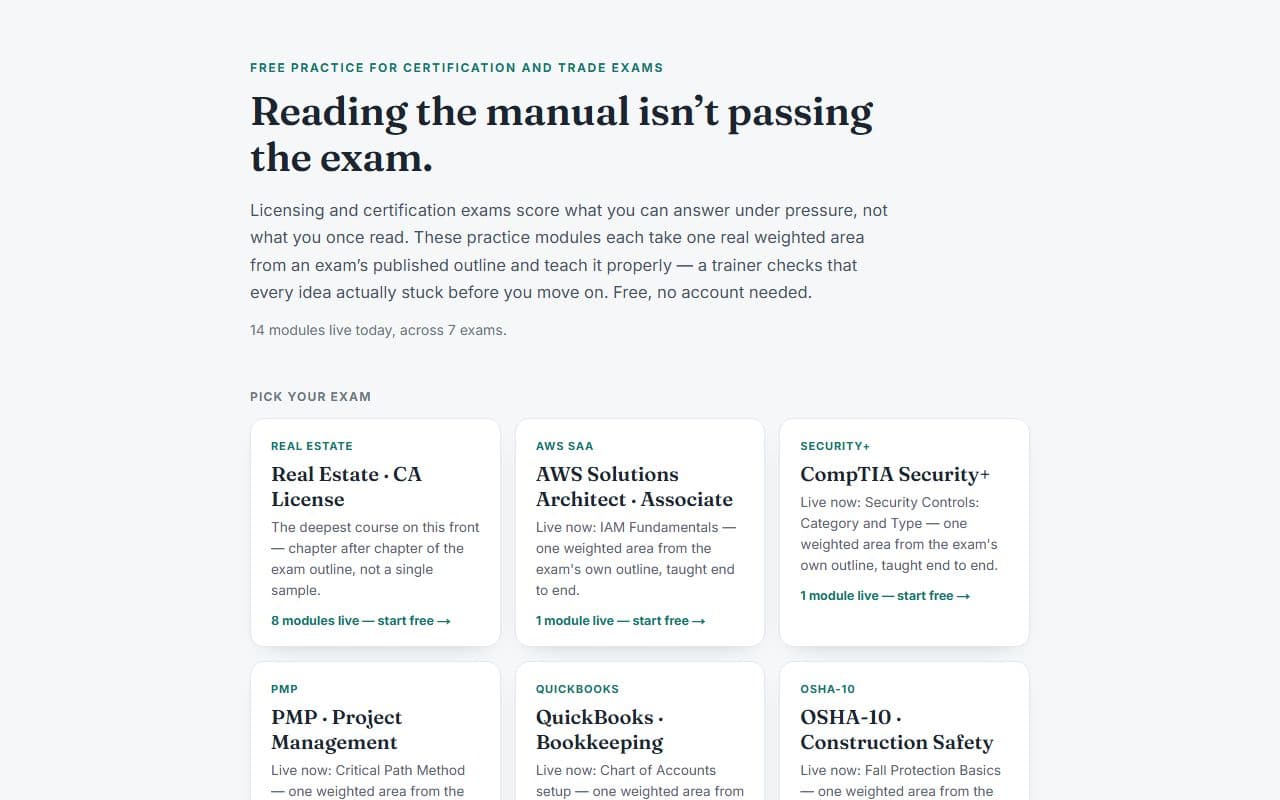
Two more lines, live today
Every Manthika line keeps its own front and its own state.
Questions before you explore
Who is Manthika for?
Three groups: school and exam students, people building a career, a trade or a business, and people learning something for themselves. Each has its own door above.
Our school runs Classes 6 to 12 — does Manthika cover that, and what’s next?
Classes 6 to 12 today; two college titles, engineering and an MBA for people running their own business, are planned for 2027.
How much does this cost, and can we try it for free first?
A free first chapter, always. The Class pass runs to 31 March 2027 at ₹999, and is free until then for every new account.
How is a Manthika book actually made?
Every book goes through the same six steps: subject, pieces, reader, layout, delivery, measurement. Each book comes from that same sequence, not a separate process per title.
Besides lessons, what else is on the site?
The book catalog with chapters open to read, pricing to buy a book or pass, the Feed’s short recall cards, a how-to-study guide, and a blog — all linked at the page’s foot.
Can I trust what is taught, and what happens if the company closes?
Every fact and number is checked twice before release. Closure risk is covered too — a public policy states what happens to your purchases if that ever happens.
Next steps
What you can do next
Try a lesson on your phone, free.
Every book, with the chapters open to read.
Buy a book, a course or a printed copy.
Short cards that bring ideas back.
How to plan, practise and revise.
Notes on how we write and why.