The Hour You Didn’t Pick

Kabir has one free hour after school today.
He can go to extra tuition before the test. Or he can go to cricket practice with his team.
He cannot do both. Whichever one he picks, the hour of the other is gone.
Both matter to him. The test is close, and so is the match. There is no way to add a second hour to the day.
Nobody has to say which hour is better. Whichever he picks, the other is the cost.
The idea
Put the hour away and look at the shape. Two things want the same hour. Kabir can only give the hour to one of them.
This is not only true of hours. It happens with money, with a shelf of phones, with a free Sunday. Choosing one thing is choosing against the other.
People who study choices say it in one sentence.
The idea
The real cost is the best alternative foregone; no best, only fit.
An alternative is one of the other things you could have done instead. Foregone means given up, not chosen.
So the real cost of Kabir’s tuition hour is not written on any receipt. It is the cricket practice he gave up to get it.
This cost never shows up on paper. It is still real.

There is no choice that is best for every person.
What a choice costs you depends on what you would have done instead, and that is different for each person.
The same choice can fit one person well and another poorly. Not because one of them chose wrong. Because what each of them gives up is different.
Kabir’s dictionary
What the dictionary says Cost: the price you pay in money.
What Kabir writes under it Cost: the best other thing you gave up. Money is only sometimes part of it.
What people say instead

Kabir’s Dadi loves a mela. One Sunday, a free one comes to the colony.
“Come, beta,” she says. “It’s free. It costs nothing.”
Kabir goes. The gate costs no money at all. Not one rupee changes hands, and Dadi is not wrong about that.
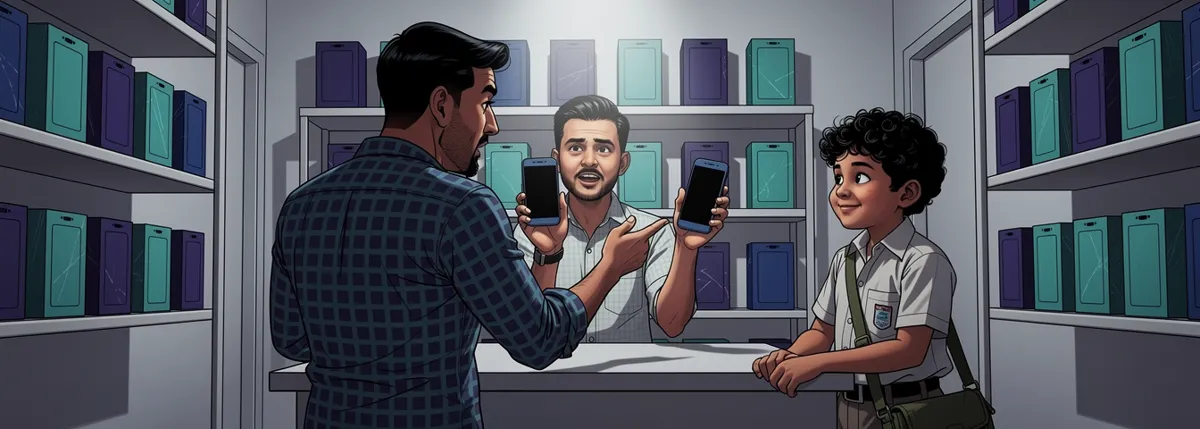
Kabir’s Mamu is buying a new phone. He picks up one, then another, sighing.
“Why can’t they just make one phone with the best camera, the longest battery, and the lowest price?” he says.
Kabir looks at the shelf. Every phone there is good at something, and short on something else. The one with the best camera has the shortest battery. The cheapest one has neither.
The same idea, elsewhere
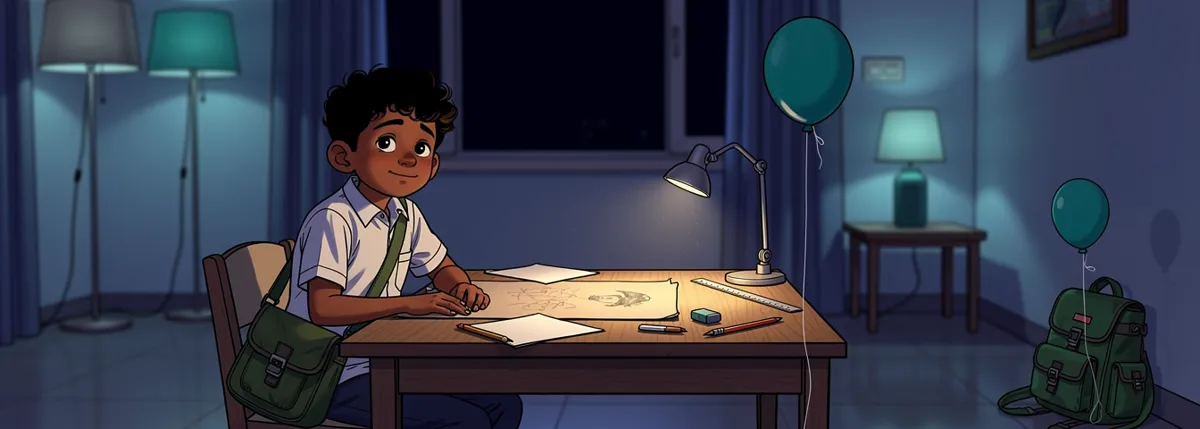
That evening, Kabir’s poster for Monday is still blank on the table.
The mela did not take a single rupee from anyone. But it took the whole afternoon Kabir needed for his project.
A free gate is not the same as a free afternoon. Dadi was right that nothing was paid. She was just not looking at the afternoon.

Mamu takes the bus to work every day, an hour each way.
He picks the phone with the longest battery. Not the best camera. Not the cheapest one.
On a long ride, a phone that dies before he gets home is no use to him at all.
The phone he did not pick is not a worse phone. It is a phone that fits somebody else.
Spot it
Kabir’s tuition hour, Dadi’s mela, Mamu’s phone — three different stories, one shape.
Here are two new situations. What is the real cost in each one?
1
At recess, Aisha can play football with her friends, or finish the last chapter of her library book before it is due. She plays football. What did she give up?
2
In a shop, Dev picks a plain, cheaper school bag instead of a bright, costlier one, so he can save the rest for a cricket ball. What did the costlier bag cost him?
Look for the shape. Aisha’s football cost her the last chapter. Dev’s bag cost him a step closer to the ball.
Neither of them paid a rupee more than the other one did. The cost was still there, in what each of them gave up.
Naming the other thing is naming the real cost.

This week, at home
Ask someone at home about a choice they made this week. Then ask what they would have done instead, if they had picked differently.
The name

One shape, three costumes. The tuition hour, the mela, the phone with the longest battery. In each one, picking one thing meant not having another. The cost was never only about money.
No one in this chapter chose wrong. Kabir, Dadi and Mamu each picked what fit them. What each of them gave up was simply different. That is the only thing the three stories do not share.
The question that finds the cost is always the same one. What would you have done instead?
The real cost is the best alternative foregone; no best, only fit.
People who study choices call this idea opportunity cost. An opportunity is one of the things you could pick. The cost is not only money — it is the best opportunity you did not take.
Kabir’s dictionary now has a fuller definition than the printed one. He did not need a rupee sign to write it.
Uncle Dignaga would have asked: what kind of thing is this, really — does the word “cost” pick out anything precise? Kabir’s dictionary said cost is the price in money. But the cricket hour was not money. The mela afternoon was not money. His dictionary had not finished the word.
Where you will see this next
Next chapter: two people trade because they want different things, not because one of them loses. The same question about what is given up sits underneath that too.