The wish list
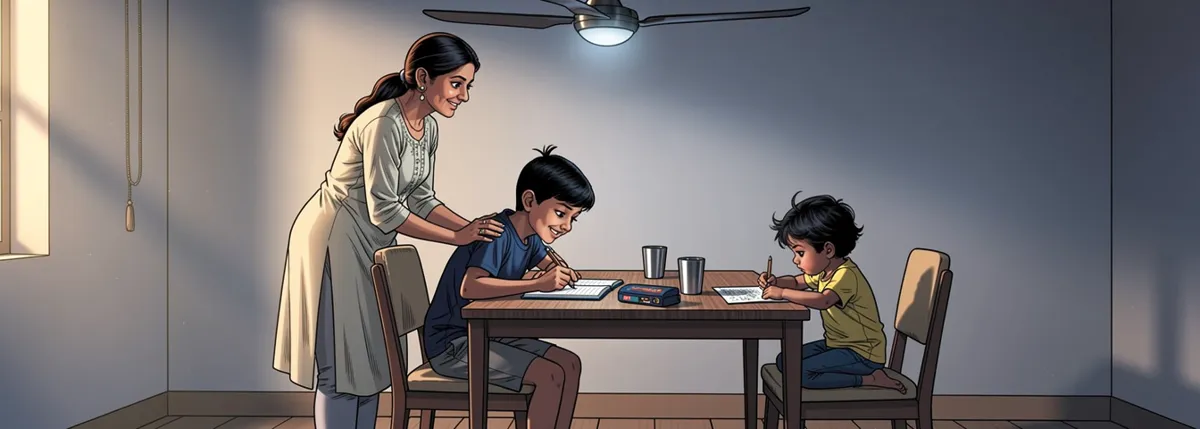
The first Sunday of the term, Mummy put the new diary in front of Dhruv.
“Write three things you want this term,” she said.
He wrote: the school cricket team. A cycle. The science fair.
The team went first. The trials were in November.
Every evening he pictured it. The jersey. The shot through the covers. The clapping. It was a bright picture, and after it the evening went soft.
Three weeks passed. The bat in the corner had been held twice.
The idea
The idea
A wish is a picture; a want names the obstacle and the price.
Draw yourself as a dot. Draw the thing you want at the far end.
A wish is the thing drawn bright and floating. Nothing is between here and it.
A want is the same thing on the ground, with a road to it. On the road, two things are drawn. The block: what stands in the way. The price: what it costs. Time, or money, or something you give up.
The thing is the same in both pictures. What is between is not.
To turn a wish into a want, ask the picture two questions. What stands in the way? The school nets open at six in the morning. What stands in the way is the bed at six. What does it cost? Forty minutes before school. Every day.
Draw the block on the road. Hang the price under it. The same team is a want.
What people believe instead
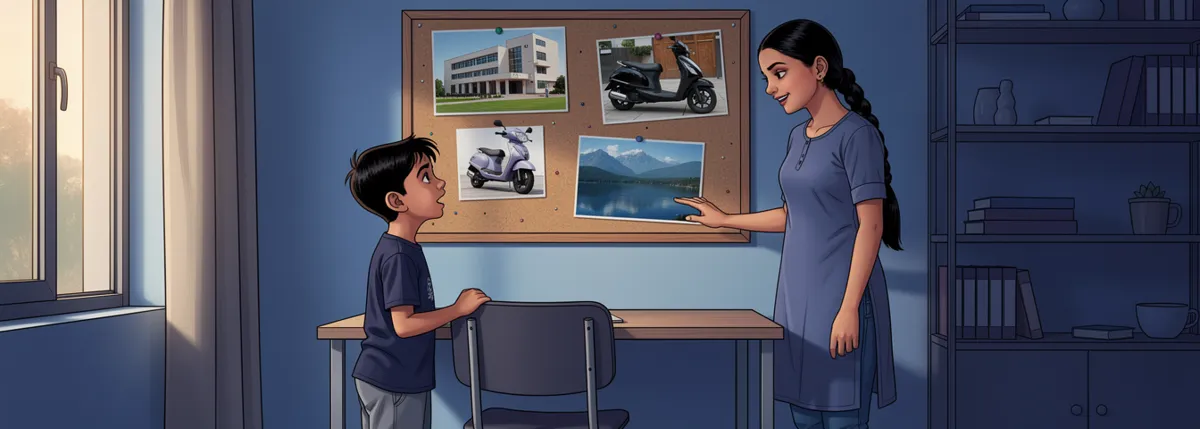
Riya didi had a board over her desk. A college with a lawn. A scooter. A lake in the mountains.
“See it every day, Dhruv,” she said, and smiled. “Picture yourself in the team. Believe it, and it comes to you.”
Dhruv did not argue. Riya didi had pictured her college every day, and she got in.
But look at what the evenings did. After the picture, the team felt done. There was less in him to get up with, not more. The bat stayed in the corner.
The picture alone is a wish. A picture soothes the evening. A road pulls you.
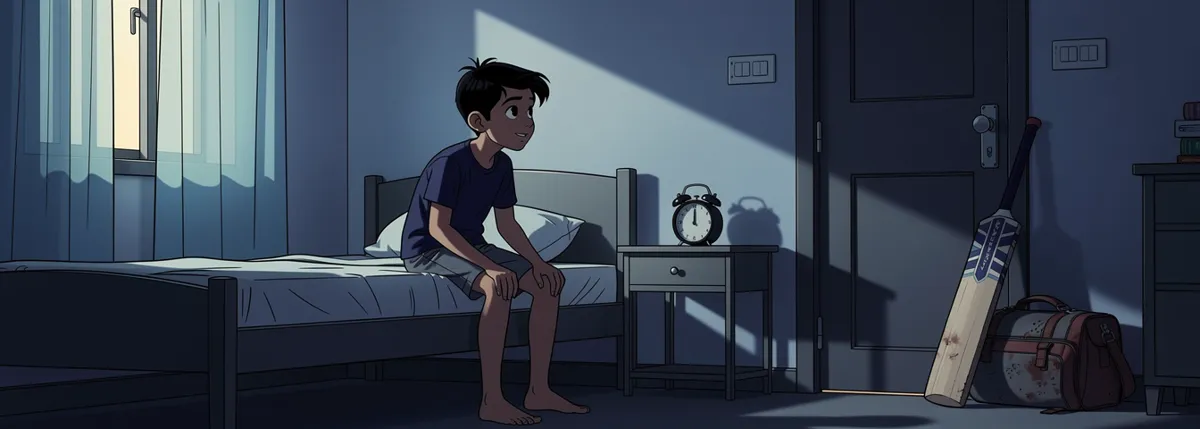
The picture is not the mistake. Keep it. It is the first half of a want, and a want without a picture has nowhere to go.
The mistake is the picture with nothing drawn between here and it.
So Dhruv drew the block in. The bed at six. He hung the price on the road. Forty minutes, every day.
The next morning the picture did not soothe him. It pulled. He sat up, and looked at the bat.
The cycle
The second wish was the cycle. Red, and shining, and floating over the whole term.
He asked it the two questions.
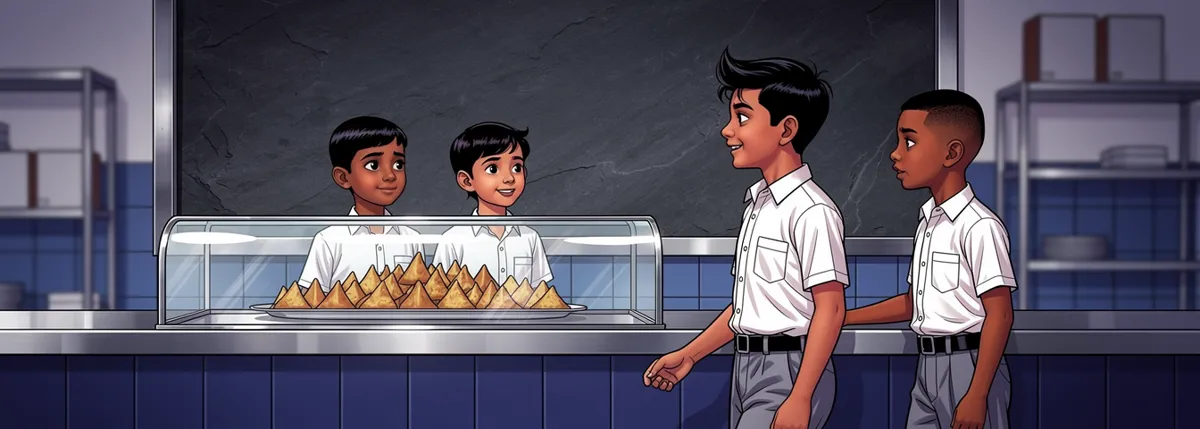
What stands in the way? The samosa counter at break. That is where the pocket money went, every day.
What does it cost? The pocket money. Every week, into the tin.
On Monday he walked past the counter with his hand closed. The cycle came down to the ground, and a road ran to it.
Spot it
1
The science fair is in February and you can see your working model on the table with a ribbon on it. What stands in the way? What does it cost?
2
You want to finish a whole English book by the end of term. Wish or want? Draw the road.
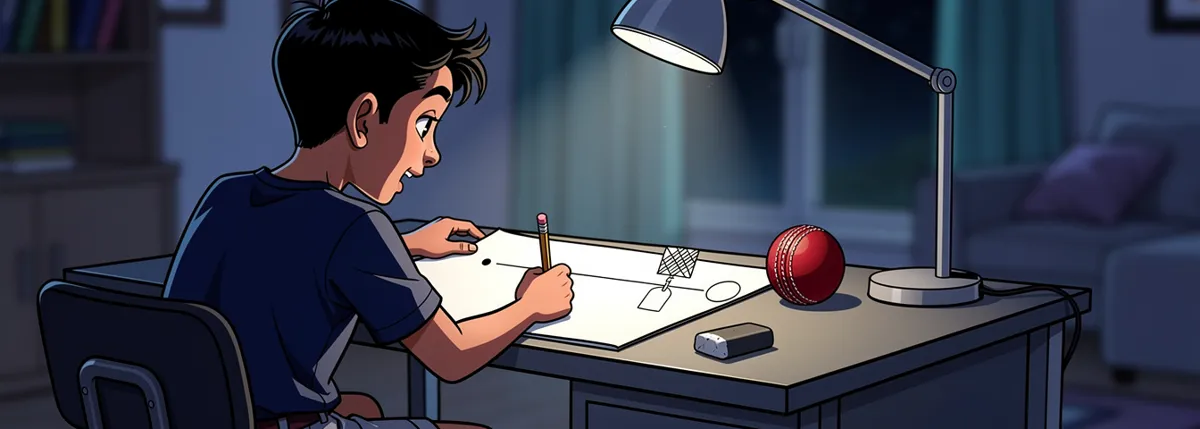
Tuesday night Dhruv drew it on paper. The dot. The thing. The road, with the block on it and the price under it. Then he ran his own test. What would go wrong if I only pictured it?
Nothing would go wrong. Nothing would happen at all.
Here is the move. Take one thing you want this term. Draw yourself, and the thing at the far end. Ask it the two questions. Draw the block. Hang the price. If you cannot answer either question, it is still a wish.
This week, at home
Take one thing from your own list. Draw the dot, the thing, and the road. What is the block? What is the price? If you cannot say, it is a wish for now.
The same road, three costumes
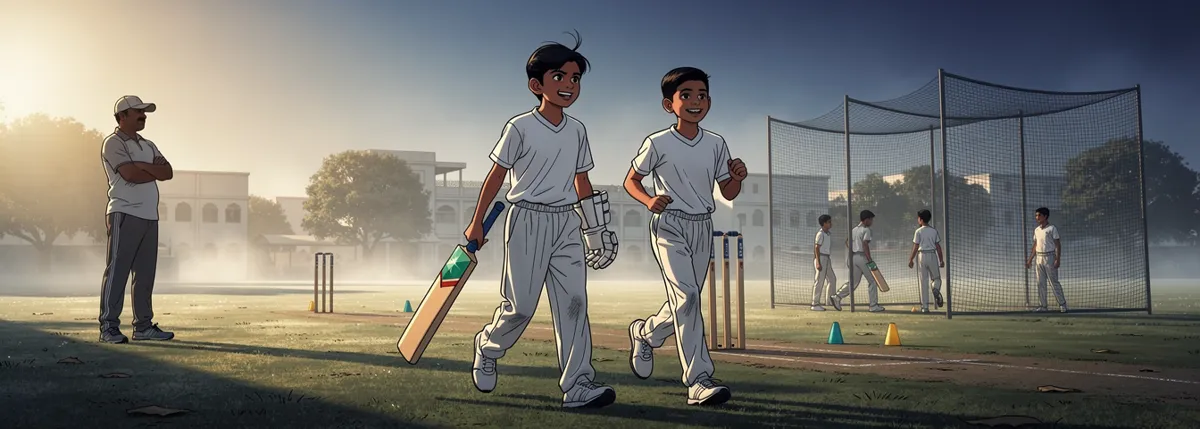
In November the trials came. Dhruv walked to the nets with the bat that had seen forty mornings. What happened at the nets is another story. The road was walked.
The team, the cycle and the science fair are one shape. You at one end, the thing at the other. A road between, with the block on it and the price under it. As wishes they floated over the term and moved nothing. As wants each had a block he could name and a price he could see. Those are the three that started to move.
He kept the picture. He always would. But now it had a road under it. On the road stood a bed at six, and forty minutes hung beneath.
Dhruv thought of Uncle Aryabhata, who counted what he could count and put a bound on the rest. The picture of the team could not be counted. The mornings could. Forty mornings before the trials, and the bat had seen two. Put the count beside the picture, he would have said, and you will know which one you have been living in. He never guessed. He counted first, and only then said how far the count could be off.
The name
The two pictures have a name in this book: wish vs want.
People who study this call the move mental contrasting. Mental: in your head. Contrasting: two pictures side by side. The thing you want, and what stands in the way of it.
Read the rule again. A wish is a picture; a want names the obstacle and the price. The obstacle is the block. The price is the tag.
The words are new. The road is not.
Where you will see this next
Next chapter: a want with a when and a where, so the block is met before it is felt. The two pictures come back in Class 8, with a plan attached.