Just one more
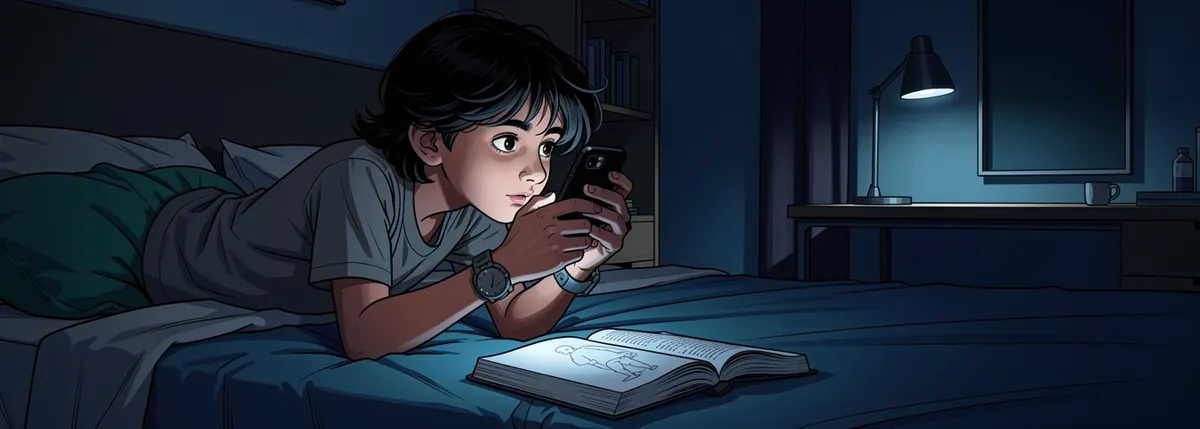
Arjun sat down to revise for forty-five minutes. He picked up the phone to check one thing.
Twenty minutes later he was still scrolling. He had not decided to keep going. He simply never reached a place where it stopped.
A story ends. A song ends. Somebody stops telling it and you go to sleep.
At one in the morning he put the phone down. The book was still open at the same page.
Nobody told him to keep going. Nothing told him to stop.
The idea
A feed does not end. It was built by people whose job is to make sure it does not.
The people who study this have one sentence for what happens next.
The idea
Old instincts misfire on engineered stimuli.
That sentence has three hard words. Take them one at a time.
An instinct is something your body does without being taught. Wanting sweet things is one. Turning your head when something moves at the edge of your eye is another.
Instincts were built slowly, over a long time, for the world people lived in then. In that world a ripe mango came once a year, and when it was finished there was no more.
Your body is still that body. What it meets every evening is not that world.
Something engineered was made on purpose, by someone, to do its job as strongly as possible. A cold drink is engineered. So is a packet of chips, and so is the feed on a phone.
Nothing here made itself. Each version was made stronger than the last, and somebody was paid to work out how.
The size of a pull tells you how strongly a thing was made. It tells you nothing about whether it is worth having.
A mango pulled at you because there was one, once a year. A cold drink pulls harder. That is all the harder pull says.
What people say instead
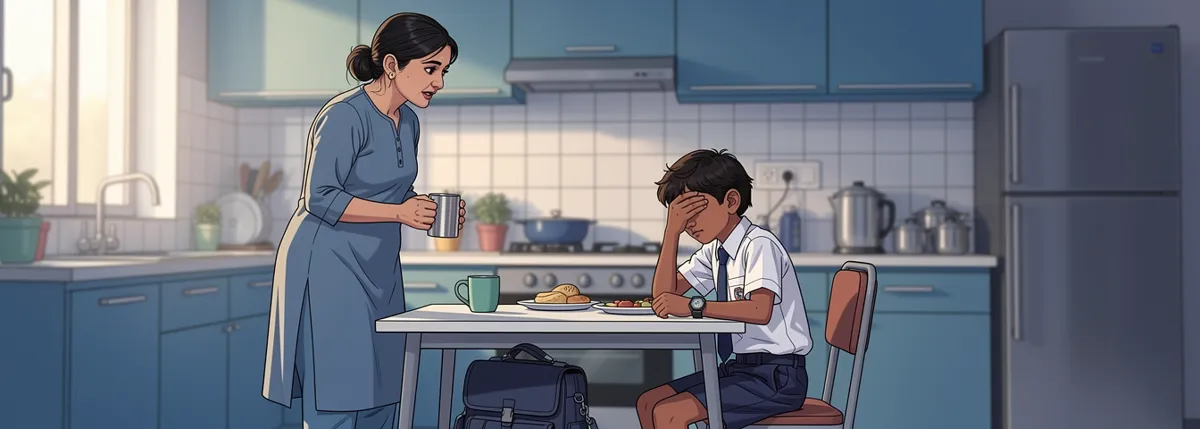
Amma had seen the light under his door. “You have no willpower, kanna,” she said at breakfast. She said it kindly, the way you say a thing you have said before. “Just put it down.”
Arjun did not argue. He had tried putting it down. It had worked for four minutes.
He thought about the textbook, open on the bed the whole time. He had never once sat up till one in the morning with that.
Amma was right that something had hold of him. She was only wrong about where it lived.
The same pull, twice more
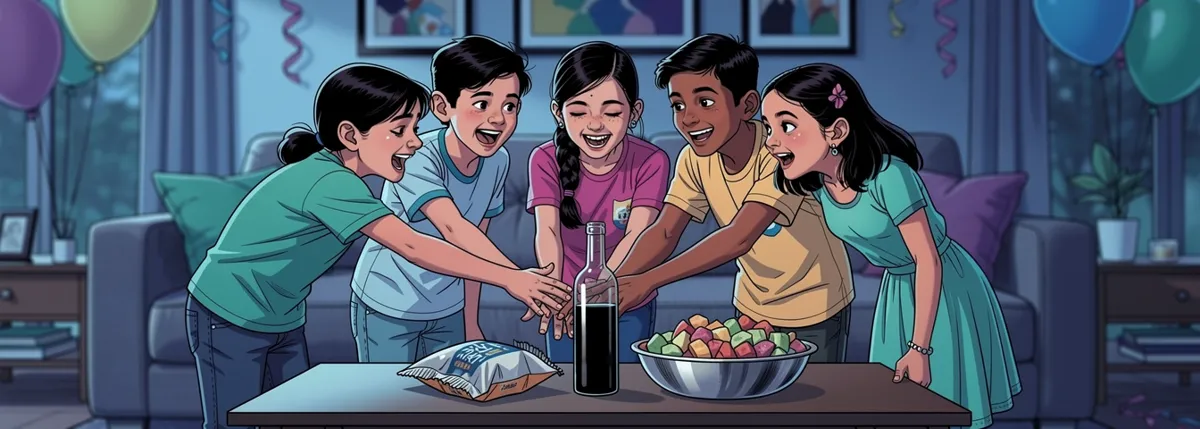
At his cousin Ira’s birthday the chips were gone in ten minutes. So was the cold drink. The bowl of cut fruit sat there all evening, barely touched.
Nobody at that table chose salt over fruit. The packet was made to be hard to stop eating. The fruit grew.
The same shape as the bedroom, in different clothes.
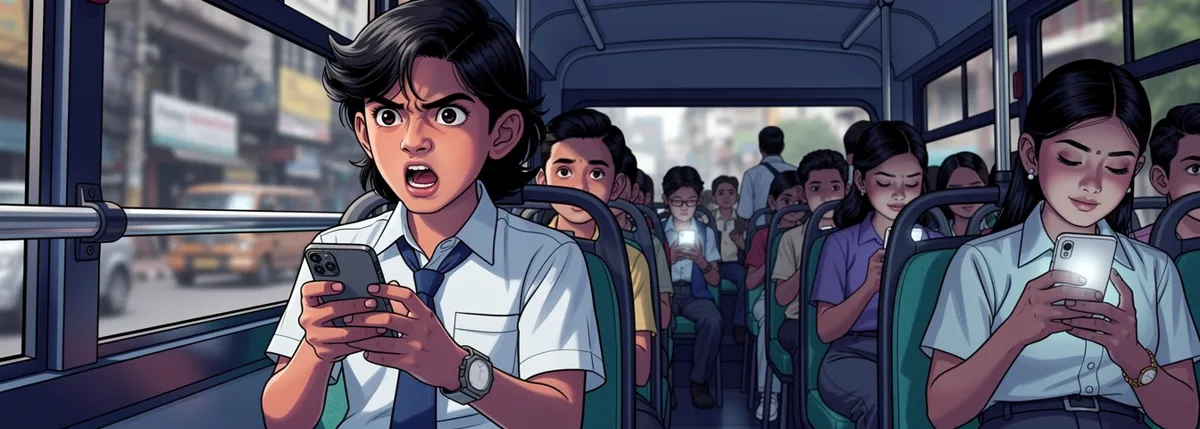
A week later a ninety-second clip made Arjun furious in ten seconds. He forwarded it before he had finished watching it.
Somebody cut that clip to its sharpest part on purpose, and threw the rest away. An argument in the street is slower. It has a dull middle, and nobody is shouting yet.
Three different things. One shape underneath.
Spot it
Two things you meet every day. Ask the same two questions of each.
1
A plate of rice at dinner. How much of it is there, and who decided it would be that much?
2
A notification at midnight. How much of it is there, and who decided it would arrive then?
One was cooked by somebody who wanted you fed. One was timed by somebody who wanted you back. Neither is a mystery once you ask who chose.
Here is the part that actually works. When a pull was built into an object, trying harder against it is a poor plan. Moving the object is better.
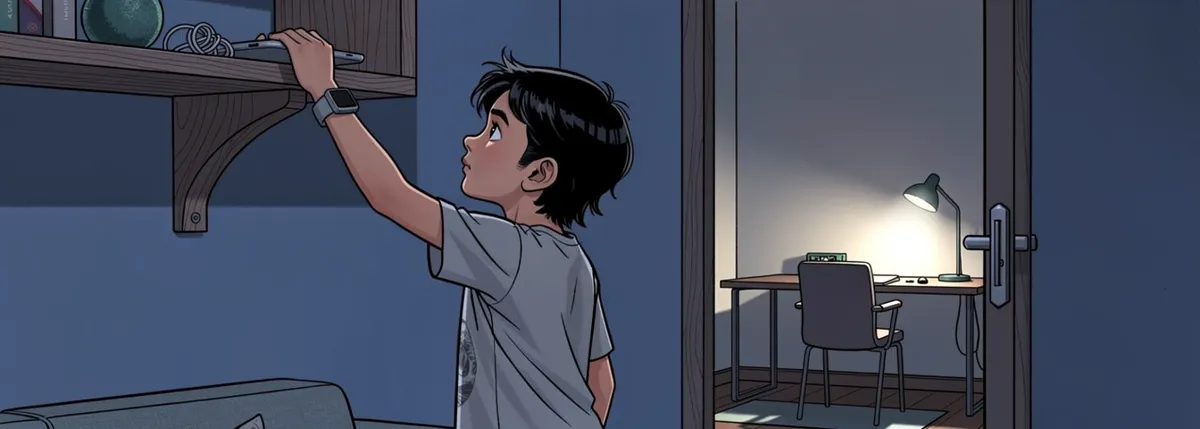
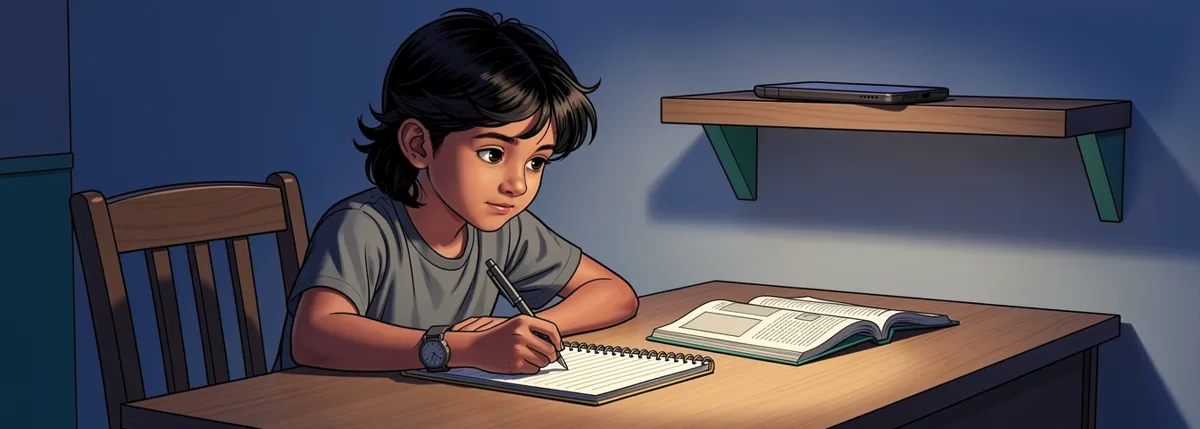
Arjun’s phone charges in the front room at night. He did not win the fight. He moved it out of the room.
This week, at home
Pick one thing you keep reaching for without meaning to. Move it — to another room, or to the far side of the one you are in. Leave it there for a week and see what the week does.
The same pull, three costumes
The same pull runs through the feed, the cold drink and the clip. Each was made as strong as somebody could make it. The body that meets all three is the old one.
None of the three is a failure of character. Each is a designed thing meeting a body that was not.
Arjun keeps two columns in his notebook: what he meant to do, and what he did. The gap used to look like a fact about him.
Amma was right that something had hold of him. It was in his hand, not in him.
Uncle Jayarashi was the one nobody quite wanted at dinner. “Show me,” he would have said. “Show me what we would see if it really were willpower.” Arjun could not answer that yet, and decided he was allowed not to. He knew one thing, though. Nobody stays up till one in the morning with a maths book.
The name
People who study this call it an evolutionary mismatch. Evolution is the slow way living things come to fit the world around them. A mismatch is what is left when the fitted thing meets a world that moved.
Nothing in the body is broken. It is answering a world that is not there any more, correctly, every time.
You have seen the shape six times now. The words are new. The shape is not.
Where you will see this next
Next chapter: a number that grows by doubling looks like nothing for a long while, and then it is everything at once. Telling a doubling from an adding is a different question from this one.