The ones that travel

Meera’s family has a group. Her father is in it, her Sharda bua is in it, everybody is in it.
Eight things came into it last week. Seven stayed where they were.
One did not. She heard it at the bus stop on Monday. From a girl in another section on Tuesday. From her mother at dinner on Wednesday.
It said the bridge on the road to school had been closed.
The bridge was open all week.
Nothing here moved on its own. Every step it took, somebody took for it.
The idea
Almost everything that reaches you has already travelled. Somebody passed it to somebody, who passed it on again.
A few things go a very long way. Most go nowhere at all.
People who study this have one sentence for what decides which.
The idea
Virality selects for outrage, not truth.
Three hard words in one line. Take them one at a time.
Virality is how far a thing goes when the people who get it pass it on.
Nothing forwards itself. A message nobody carries stops that second, in that one phone.
So a distance is not a fact about the message. It is a count of the people who decided it was worth sending on.
Outrage is the hot jump you feel when a thing is unfair, or frightening, or about to hurt somebody you know. Anger, and under it the feeling that people have to be told.
The jump lasts about two seconds. Passing a thing on takes less than that.
Look at the four that travelled. A bridge closed. A man shouting at a shopkeeper. A trip cancelled. A scooter taken off the street.
Nobody sat down and chose those four.
Where you saw this last
Last chapter: what reaches you was chosen before it reached you, and somebody or something did the choosing. This one has nobody at the gate at all.
Here is the part that is easy to miss.
There is no desk anywhere where somebody checks. The choosing is thousands of small passings-on, each one made in the two seconds after the jump.
Nothing in those two seconds asks whether the thing happened. Being true does not carry a message, and being false does not stop one.
What people say instead
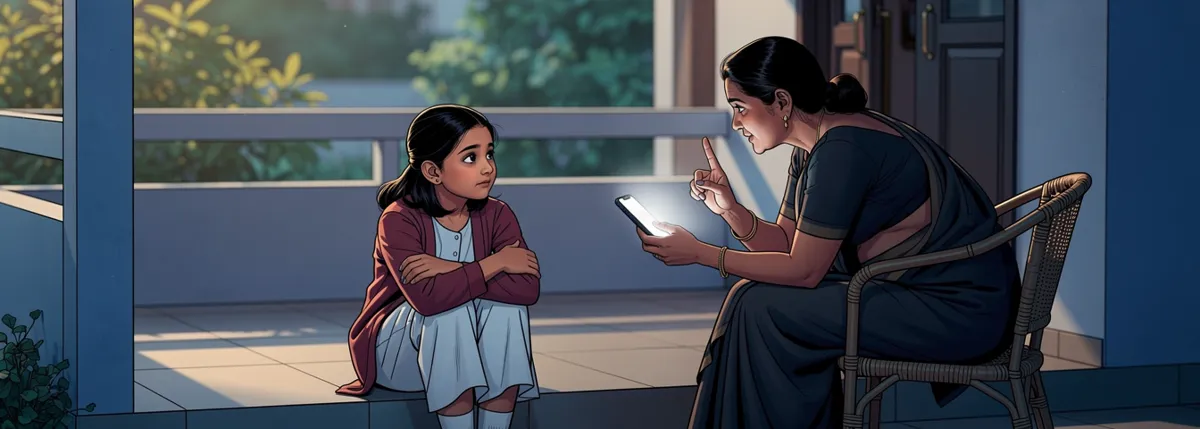
Sharda bua sent the bridge message on to two more groups.
“Beta, it has gone everywhere,” she said. “Four people sent it to me. There must be something in it.”
Four people had sent it, and she trusted them. She did not want anybody stuck at the bridge.
Meera had sent it on an hour before her. She did not say so.
Two more weeks
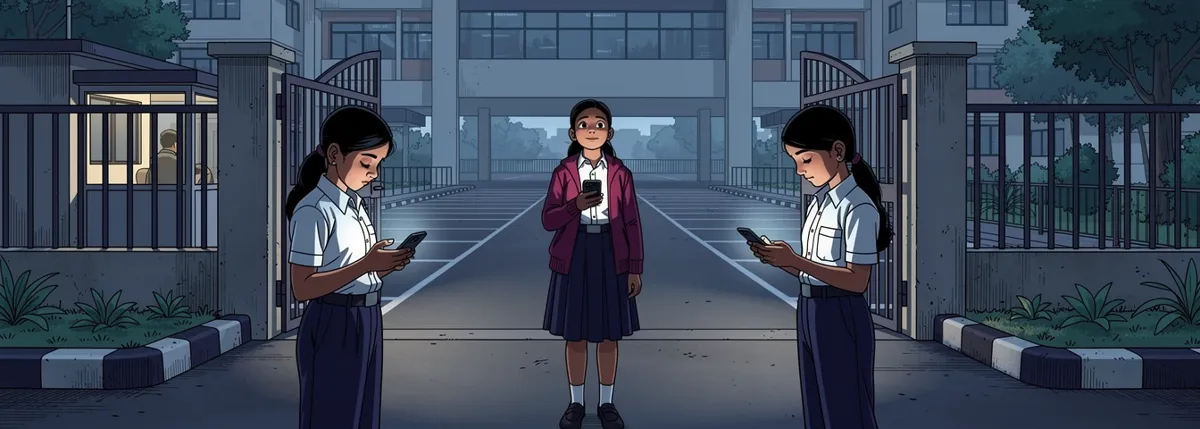
The next Friday was the museum trip.
At ten past seven a message reached the class group. The trip is off.
By half past seven nobody was leaving home, and three more messages had gone round saying pass it on.
At eight the school sent its own. The trip was on. The buses were already at the gate.
That one went to nobody. There was nothing in it to pass on.
It is not only phones.
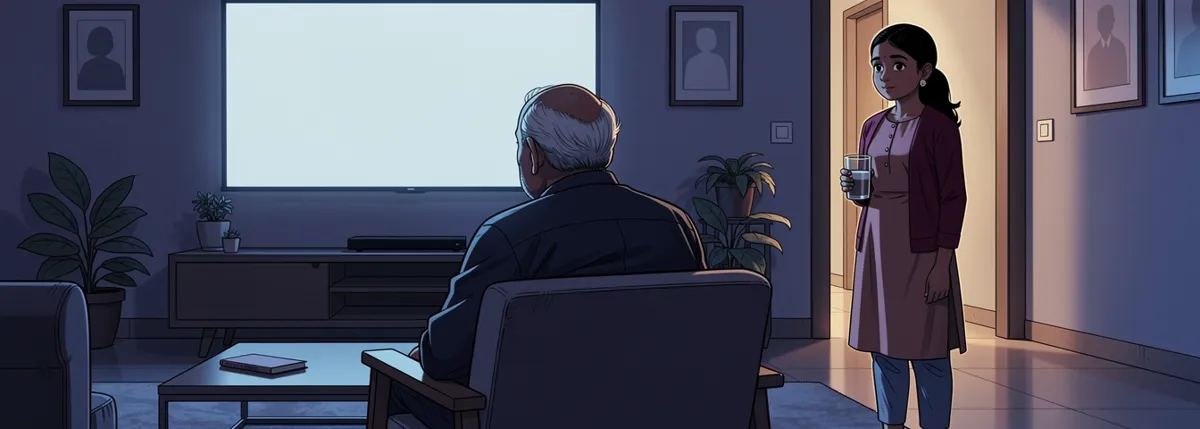
A channel Meera’s grandfather watches put out five clips one week. The one everybody saw was a shouting match in the market.
The clip about the new water line went almost nowhere. That pipe runs past their own street now.
The same people made both.
Spot it
Two crowds of things. Ask the same question of each.
1
Six things went round Meera’s class last week, and some went much further than others. What did the long ones have in common?
2
Five videos reached her phone this month. Same question. What was the same about the ones that went furthest?
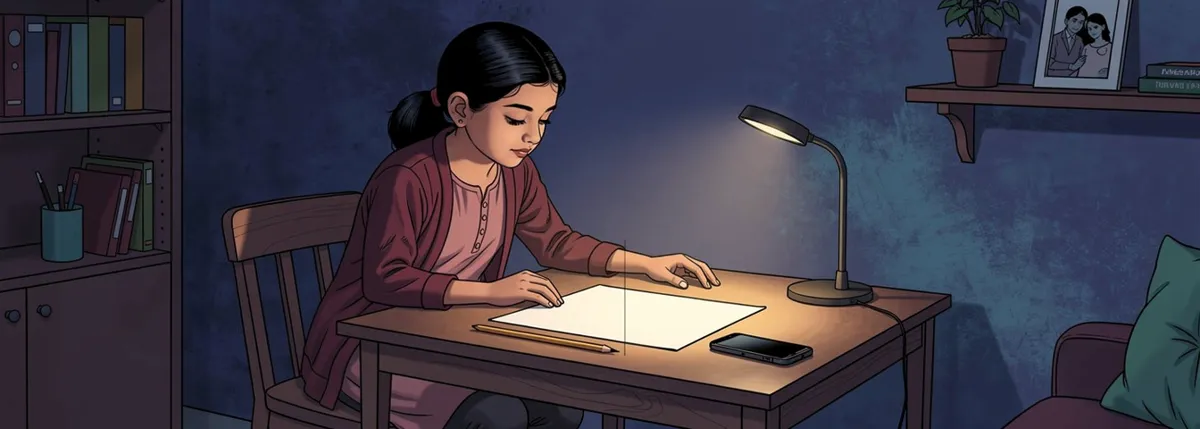
Meera keeps a sheet with two columns on it. One side for what a thing is. The other for what carried it.
Three crowds, one week each
The family group, the class group and the channel are three crowds of things that could have travelled. In all three the same kind went furthest. Not the true ones. The hot ones.
In the two you were asked about, the long ones are the ones somebody read standing up. A fight. A teacher leaving. A marking everybody thought unfair. An animal in a kitchen. The quiet ones are not less true. They are quieter.
Nobody in any of the three was spreading a lie. Every one of them was passing on the thing that had moved them.
So the first question is not whether a thing is true. That one comes later.
First: what carried this all the way to me? The answer is usually two seconds old and sitting in your own chest.
This week, at home
Think of the last thing you forwarded on to somebody else. Not read. Sent on. What did you feel in the second before you sent it?
Meera’s grandfather had a story about a teacher called Panini. He listened to the way people spoke, for years, until he could write down the rule they were all keeping. Nobody had taught them that rule. Nobody had decided it. It was there anyway, in everything they said. Meera looked at her three weeks and thought: this is a rule nobody decided either.
The name
People who study this call it virality, and they say that virality selects.
You met selecting a chapter ago. Somebody or something let a few things through and held the rest back.
Here nobody lets anything through. The choosing is thousands of separate two-second decisions, and what it picks on is the jump.
Not truth. Truth is not in the room.

Nothing about Meera’s family changed. Nothing about her class changed.
What changed is that she now feels the jump and knows what it is. It is the thing that carried this here.
Where you will see this next
Next chapter: every picture of a thing leaves something out, and somebody chose what.