What the head puts in
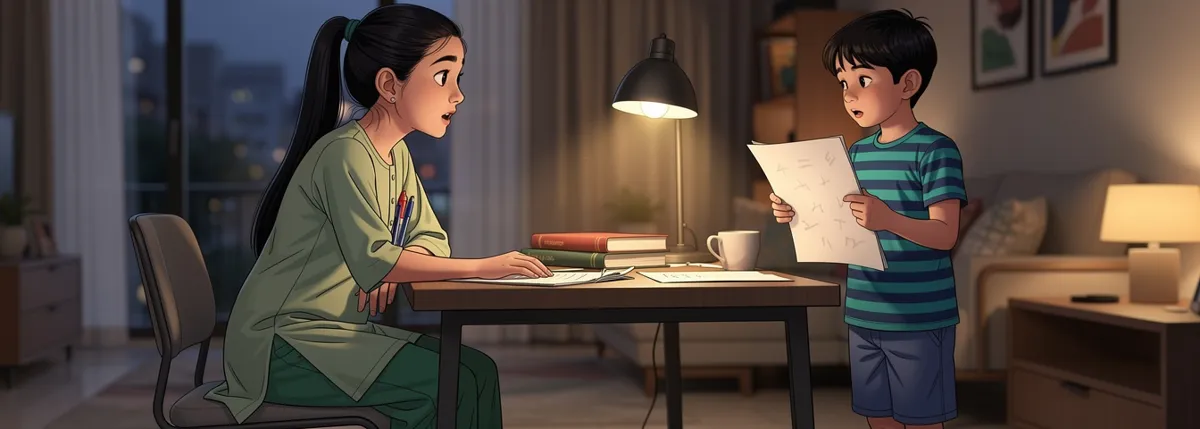
Ananya wrote an essay about the Sunday fair. Then she read it through three times, slowly, pen in hand.
It was fine. She was sure of it.
Her brother Jassi picked it up and read it out loud, one finger under each word. “We went the the fair on Sunday.”
He is eight. He read exactly what was there.
A word was missing. Another was there twice. Her eyes had passed over both, three times.
The idea
You would think your eyes work like a camera. Light comes in, and there is the page.
People who study seeing say something stranger, in four words.
The idea
You see your model.
Your head carries a picture of how things usually are. How a sentence usually goes. What is usually on the stairs. Who wears a red cap.
That picture is your model. It is built from every time before: thousands of sentences, thousands of evenings on the same stairs.
Nobody builds it on purpose. It grows by itself, one evening at a time.
The eyes do not send the whole scene. They send scraps: a colour, a shape, a movement.
The head fills in the rest from its model. It does this fast, before you know anything has happened.
Ananya waved. Harpreet waved back. The name came from her head, not her eyes, and this time the head was right. Most days, that is how it goes.
Where you saw this last
Chapter 5: every map leaves something out. The map in your head leaves things out too. It also puts things in.
Here is the part that is hard to believe. You cannot feel the join.
The piece your head put there looks exactly as real as the piece your eyes sent. Nothing marks it.
So a fourth reading would not have helped Ananya. Her head knew what the sentence meant to say. That is what she saw.
What people say instead
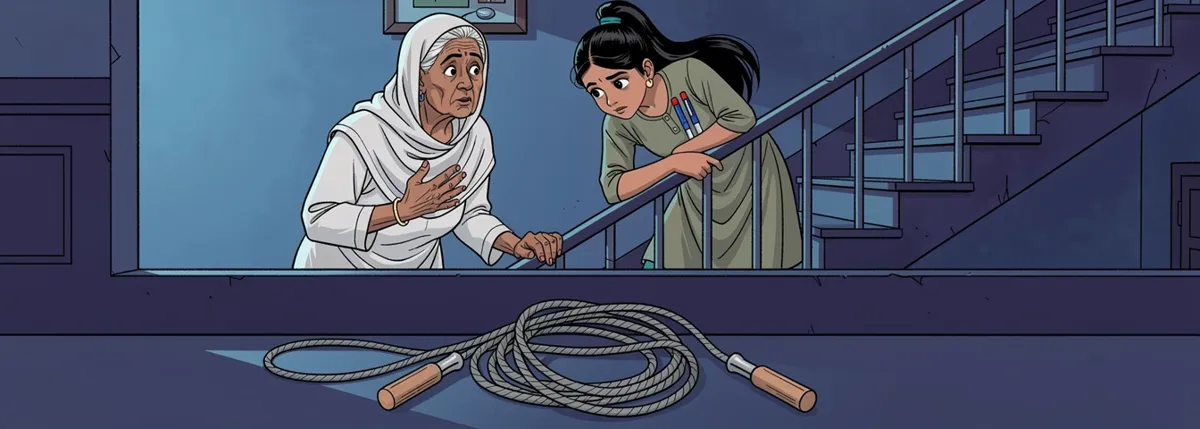
That evening Biji stopped halfway down the stairs and called out.
Something long and thin lay curled on the bottom step. Jassi ran and switched on the light. It was his skipping rope.
Biji laughed and patted her chest. “I saw it with my own eyes, puttar. A snake, plain as day. The dark played a trick on me.”
Ananya did not argue. For one second she had seen the snake too.
Two more
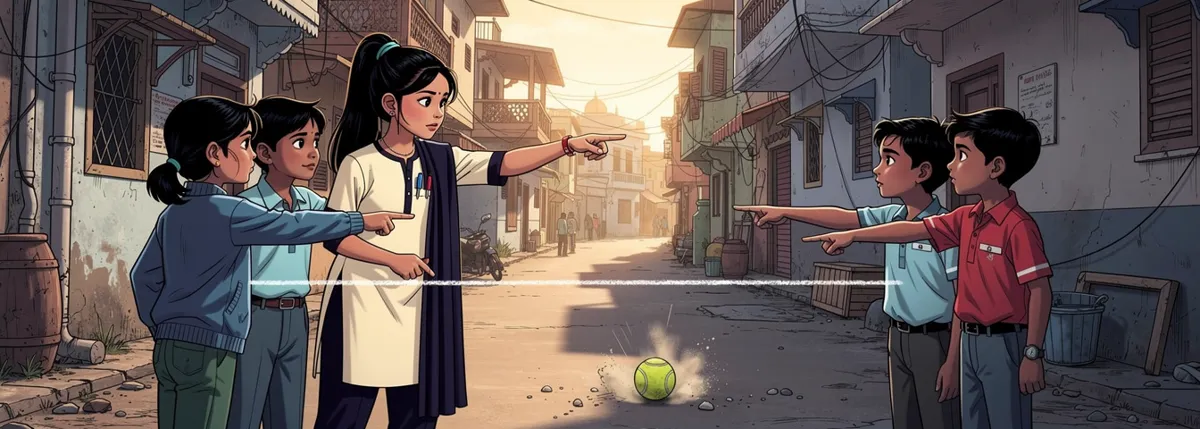
On Saturday the lane played its match. The last ball flew low and landed by the chalk line, in a puff of dust.
Ananya’s side saw it land over the line. The other side saw it land short. Both sides shouted, and both were honest.
The same scraps reached every eye. Each head filled in the last piece from what it was waiting for.

It is not only eyes.
At the station a speaker crackled over the noise. Papa picked up the bags and set off for platform two. The Delhi train always comes in on two.
The speaker had said four. Ananya heard four, and caught his sleeve just in time. Papa’s head heard two, because two is what it had heard a hundred times.
Spot it
Two moments. Ask the same question of each.
1
Nani rang on a bad line. Ananya heard “Beta,” then a crackle, then “at six.” What did her head put in the gap? Where did it come from?
2
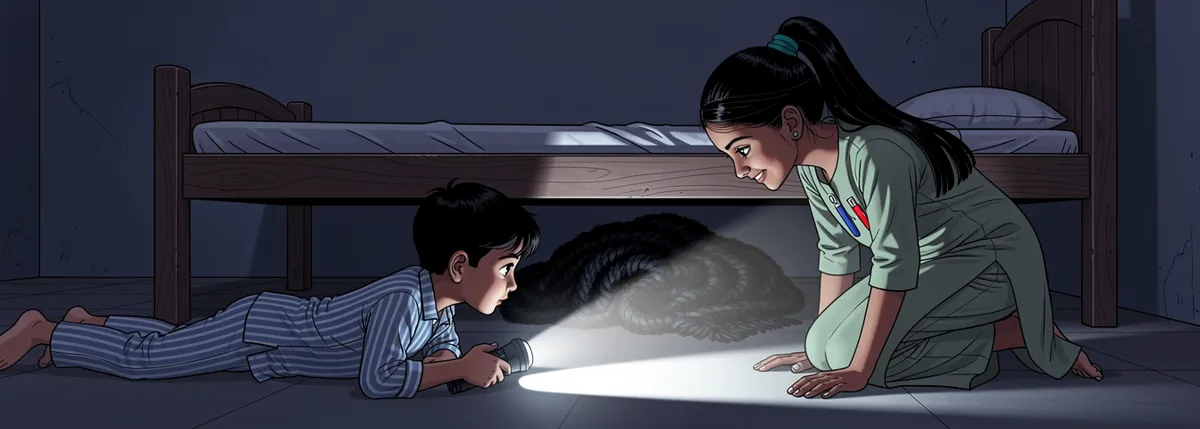
Late at night Jassi saw something black and furry under the cot. What did his head make of it? Why that, and not something else?
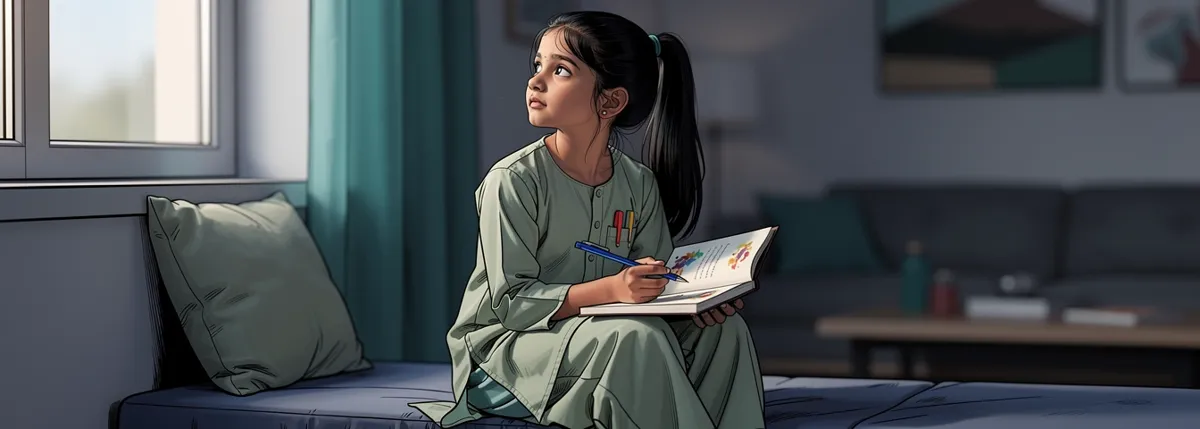
Ananya writes in her books in two colours. Blue for what the page says. Red for what she thinks it says. She has started to notice they are not always the same.
Four heads at work
The essay, the stairs, the lane and the platform. Every time, a few scraps came in and a head filled the rest.
The two you were asked about work the same way. Nani rings every Sunday to call them over, so Ananya heard “come over”. The neighbours’ cat often sleeps in their house, so Jassi saw a cat. It was Biji’s black shawl, fallen off the bed.
Most of the time the filling is right. That is why it feels like seeing. Sometimes it is wrong, and it still feels exactly the same.
So when two honest people see different things, neither has to be lying. Ask what each head put in, and where it came from.
This week, at home
Write one sentence with a small word missing and another word written twice. Read your own sentence quickly first, and notice what your head filled in. Then read it again with a finger under each word.
Ananya thought of Nanu’s story about a teacher called Dharmakirti, long ago. He had one question for anybody sure of what they saw: what would you do differently if you were wrong? She thought about the stairs. If it was a snake, call somebody. If it was a rope, pick it up. Either way, the first thing was the same. Switch on the light.
The name
People who study this say that perception is inference.
Perception is what your senses bring you: seeing, hearing, noticing.
Inference is working something out from clues. Smoke on the hill, so a fire. A red cap, so Harpreet.
So seeing is not a copy of the world. It is your head’s best guess, made from scraps and from every time before.
Your head is not being careless when it guesses. It is being quick, and quick is usually what you need.
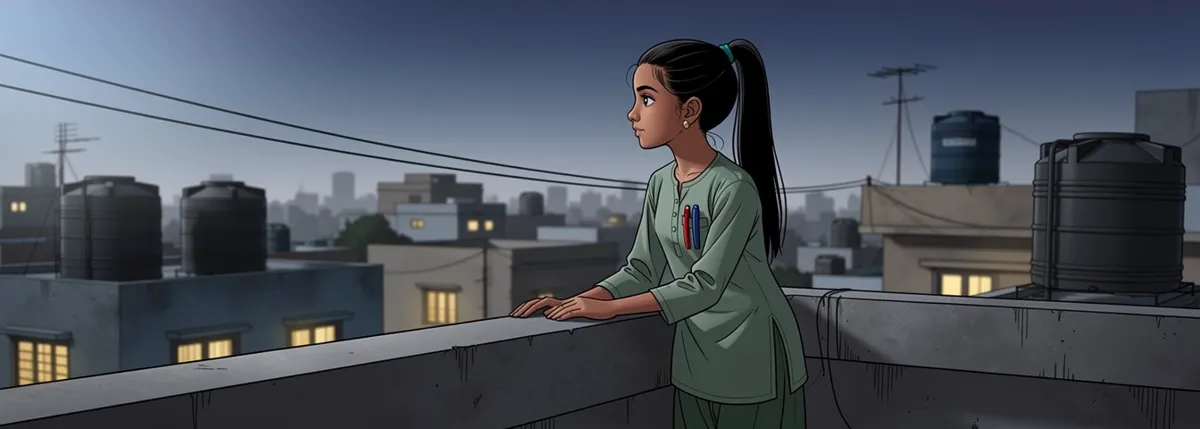
Nothing about Ananya’s eyes changed. What changed is that she knows her head is always helping. Usually it helps well. Sometimes it helps too much.
Where you will see this next
Next chapter: some scraps reach you from people you have never met.