Someone put it there

On Saturday, Mummy sent Aarav into the big new shop near home for one thing: a packet of milk.
The milk was at the very back. To reach it, he walked past biscuits, then chocolates, then cold drinks, then a long table of offers.
He came out with the milk and a chocolate he had not gone in for. The next Saturday, the same thing happened.
The milk did not end up at the back. Somebody put it there.
The idea
Aarav had walked that way ten times and never once asked why. People who study how things are made put it in one sentence.
The idea
Everything man-made was decided by someone, for a purpose, often not yours.
Take it one part at a time.
Man-made means made by people. Rain is not man-made. A shop is. So is a road, a queue, a game and this book.
Anything people make, somebody decided. Somebody chose where the milk goes. They could have put it by the door.
A purpose is what a thing is for. To find it, ask of each stop on the way: who is this for?
The shop wants you to pass everything on the way. Some of it goes home with you. That is its purpose. It is not yours: you came for milk.
Where you saw this last
Last year: people respond to what pays them. A shop is paid when you buy, so it lays the way to make you buy.
Here is why this is hard to see. Walk the same way every week, and it stops looking decided.
It starts to look like the only way, like a hill or the rain. Nobody asks who put a hill there. So the places you know best are the hardest ones to ask about.
What people say instead

Aarav told Dada about the milk at the back.
Dada smiled. He did not want Aarav cross with a shop over one chocolate. “Arre, shops are like that, dikra,” he said. “Some things are just the way they are.”
Dada was right that most days nobody stops to ask who decided.
Then he laughed. When Dada was twelve, the milk came to him. “The milkman rode to our door on his cycle every morning,” he said.
Two more ways
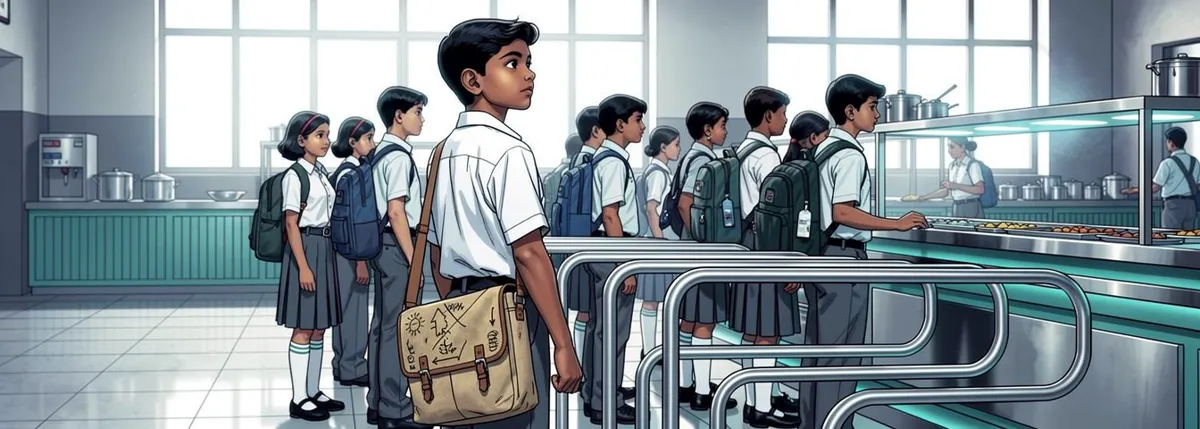
In June, Aarav’s school put steel rails in the canteen. Now the queue bends along the wall before it reaches the counter.
“It is longer!” said his friend Irfan.
Aarav had seen this shape before, in the big shop. He asked himself: who laid this, and what for? The school laid it. The bend takes the line past the teacher on duty, so she can see every child. That purpose is the school’s.
Inside the rails, nobody can push in ahead of you. That one is yours.
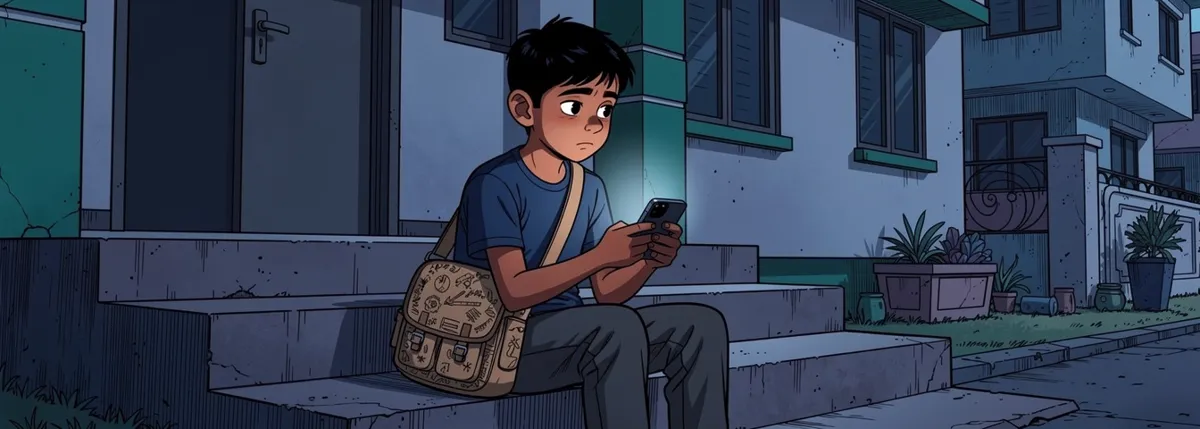
On Sundays, Aarav may play a game on Mummy’s old phone.
When a round ends, one big bright button starts the next one.
To stop, he taps a small grey cross. Three screens come next: “One more go?”, “Watch this for a free life” and “Are you sure?” Only then does it stop.
The people who made the game laid both ways. The way back in has no stops. The way out has three.
Nobody hides the cross. It is only further away than the button that starts the next round. Somebody decided that too.
Aarav’s teacher once told the class about Gautama, who taught long ago how to reason one step at a time. What do you see? What usually goes with it? Does this case fit? Aarav tried the steps on the game. A long way out usually goes with someone wanting you to stay. This one fits. He was not surer than before, only checked.
Spot it
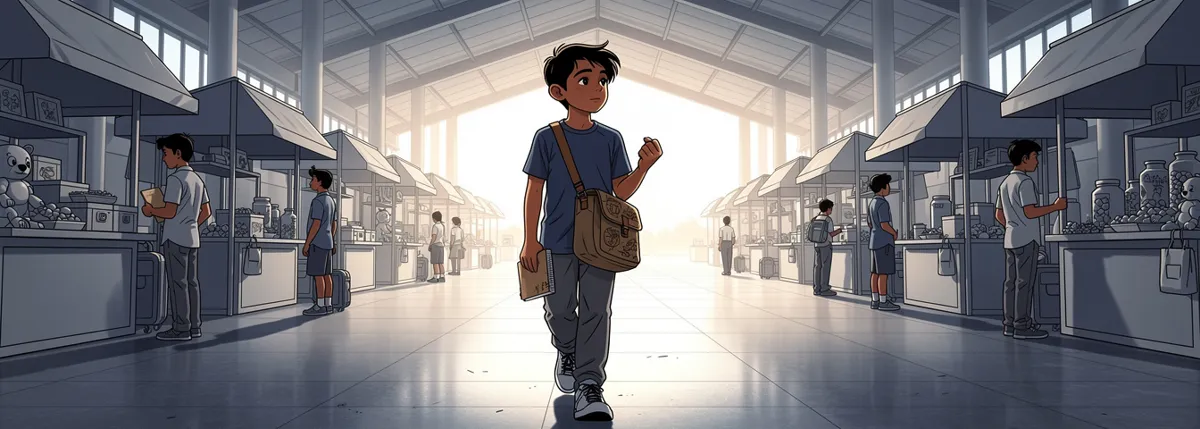
Two more ways. Ask the same two questions of each: who laid this, and what for?
1
At a big bus stand, the way from the buses to the road goes through a long hall of stalls. Who laid it out that way, and what for?
2
Every chapter of this book shows you a picture first and gives you the name last. Who decided that, and what for?
Aarav opened his jaadu-notebook to a blank page and drew the bus stand, the long way and the short one.
He left both questions without answers for now. What would you write under each one?
Every way was laid

The bus stand was laid out by whoever built it. Every stall you pass pays them. That purpose is theirs.
This book was laid out too. The picture comes first so you can see a thing before you name it. That purpose is yours.
The big shop, the canteen and the game were decided the same way: by someone, for a reason. Often the reason is not yours. Not always.
Aarav looked at his notebook. Five places, one shape: a way somebody laid, with stops on it.
This week, at home
Walk through one room at home or at school. Find one thing somebody put there on purpose. Ask who, and what for.
The name
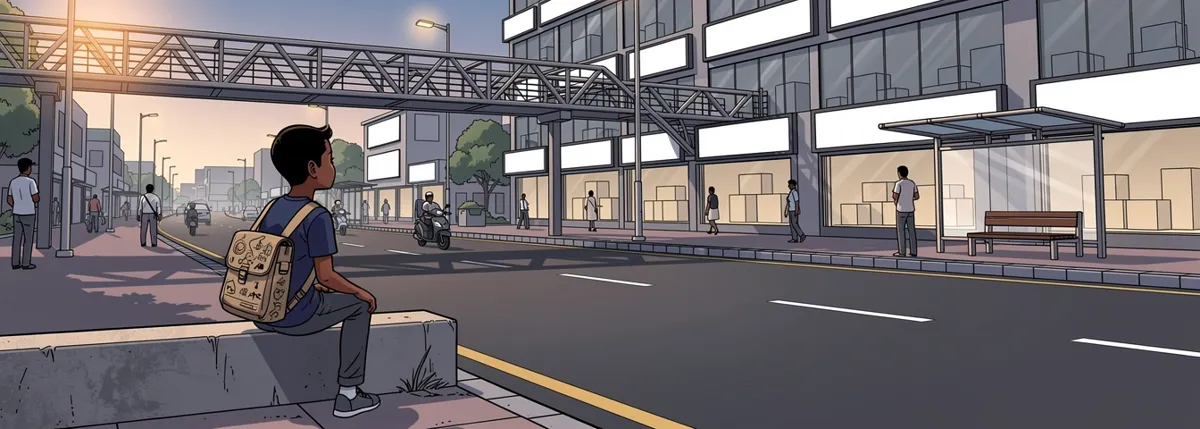
People who make things call this design. To design something is to decide what it will be like, and what it is for, before it is made.
Last year you met people who respond to what pays them. The people who design things are people too. So the question is always the same: designed for whom?
Aarav still buys milk at the big shop. Now he sees the chocolates for what they are: a stop somebody put on his way.
Where you will see this next
Next chapter: the things you get wrong the first time you use them. Whose mistake is that?