The window seat

Riya had the window seat on the school bus. She watched the road rush by and felt sick.
Zoya sat next to her, on the aisle. She had wanted the window seat since the trip began.
Riya offered to swap. Zoya said yes at once.
Riya felt better. Zoya finally had her view. Neither one won anything from the other. They just wanted different things.
A few rows back, Aarav had watched the whole thing. Nobody had argued. Nobody had even raised their voice. And yet something had clearly been settled.
Nobody had to lose for the other to gain.
Aarav wrote that down. Nobody had asked him to. It felt like a shape he had seen before, wearing a different costume.
The idea
Put the bus aside and look at the shape. Two people have two things. Each one values the two things differently.
You already know that every choice costs you something you gave up. This is what happens when two people give up different things, at the same time, to each other.
The idea
Different valuations make positive-sum trades.
A valuation is how much a thing is worth to one person. It is not the same for everyone.
The window seat was worth little to Riya. It made her feel sick. It was worth a lot to Zoya. Same seat, two different valuations.
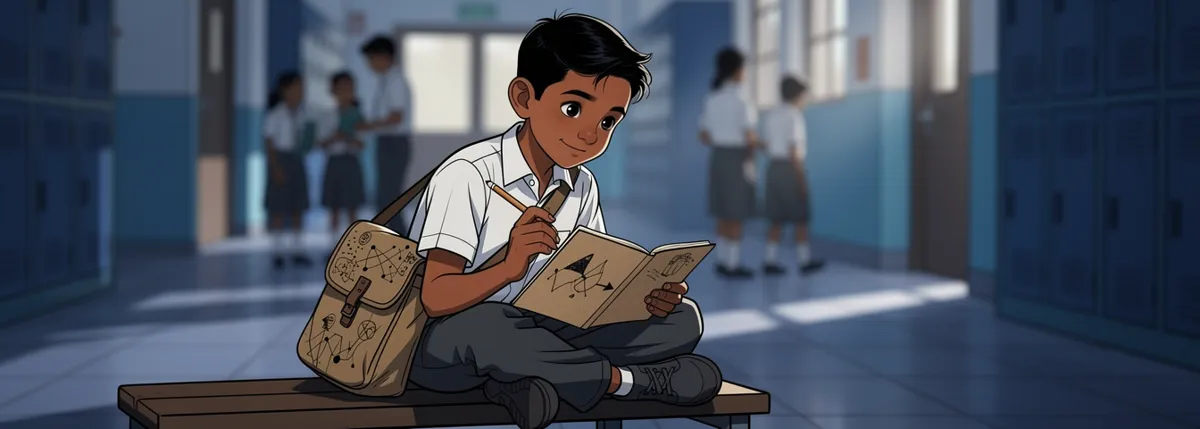
When two people value the same two things differently, a swap can make both of them better off at once.
A race has one winner. This does not. Nobody has to lose for the other to gain.
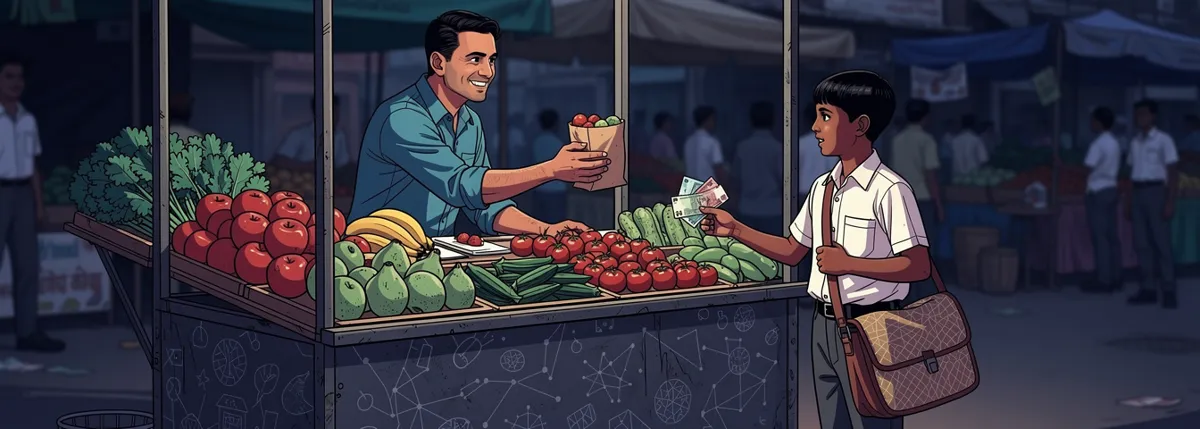
Think about the fruit seller down the road. The seller wants money more than one more piece of fruit. The customer wants the fruit more than the money in her hand. Both walk away holding what they wanted more.
What people believe instead
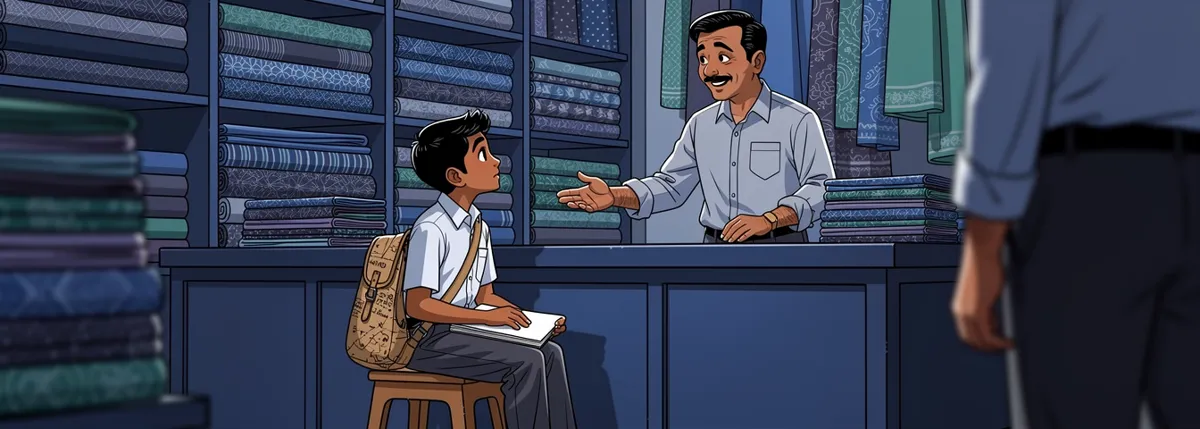
Aarav’s Kaka runs a cloth shop. Aarav has watched him haggle with customers for years.
“Someone always wins, someone always loses,” Kaka told him once. “That is why haggling is a fight.”
Aarav did not argue. Every haggle he had watched ended the same way: the price fell exactly as far as the customer pushed it.
But Aarav thought about the bus. Riya and Zoya had not fought over the seat. They had just noticed they wanted different things, and swapped. Nobody had won. Nobody had lost.
The same idea, at lunch and at home

At lunch, Priya was bored of her sabzi-roti. She had eaten it four days running.
Kiran was tired of his roti-egg, for the same reason. He wanted anything else.
Neither lunch was bad. Each one was just worth less to the child who had it.
They swapped half of each. Priya got a lunch she liked more. So did Kiran. The same food, just traded, and both of them happier eating it.
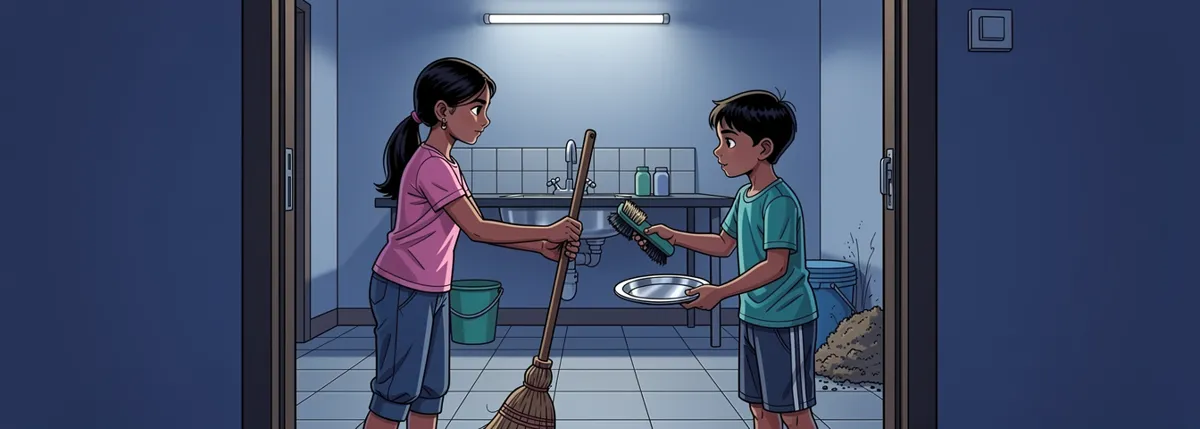
At home, Neha hated washing dishes but did not mind sweeping. The dishes made her hands smell of soap for hours.
Her brother Dev was the opposite. He found sweeping boring but did not mind the dishes at all.
They swapped chores. The same two jobs got done, on the same evening, by the same two people. Each one now did the job they minded less.
Spot it
Two new situations. Which one idea explains both?
1
At a school mela, two children each have a toy the other one wants. Their parents are arguing about whose toy is worth more.
2
Two classmates each own a textbook the other one lost. One offers to lend hers for the year in exchange for his.
Look for the shape. Two people, two things, two different valuations. Ask: would a swap make both of them better off?
You will not always know for certain. But the question is worth asking before you decide anyone has to lose.
This week, at home
Ask someone at home about a trade they once made — a swap, not a sale. Ask what each side gave up, and what each side got.
The name
People who study trade have a name for this: gains from trade. A gain is something you end up with that you did not have before.
Nothing new was built on the bus, at lunch, or at home. The same things just moved between two people, and both ended up better off.
The name says trading itself, when valuations differ, can create something — not just move it around.

One shape, three costumes. A bus seat, a tiffin, a chore. In each one, two people valued the same two things differently, and a swap left both of them better off.
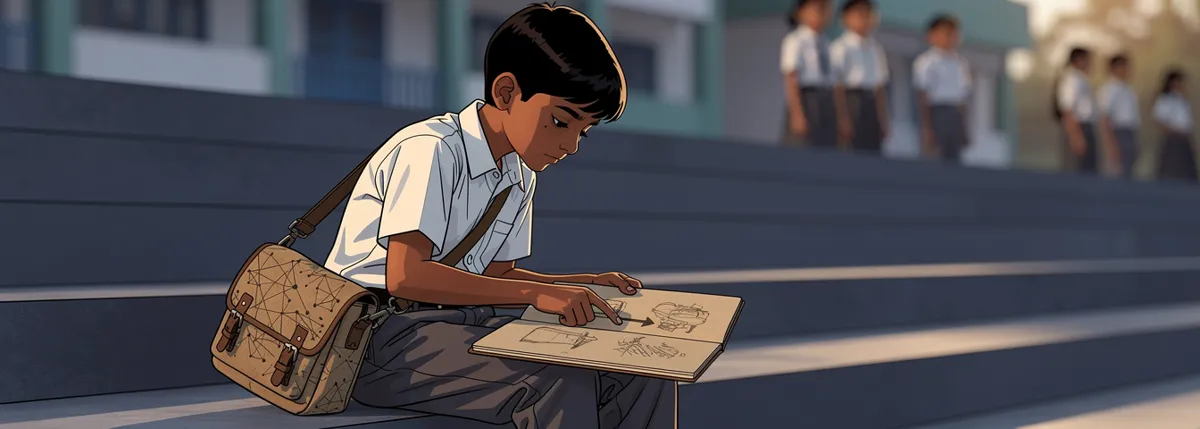
Aarav closed his notebook. He had drawn the same arrow three times now, in three different corners of his day. It had pointed the same way every time.
Different valuations make positive-sum trades. So before you take a side, ask whether a swap would help everyone.
Uncle Panini used to say: look at what is already in front of you — the pattern is whole, you just have to see it. Aarav had seen it three times now. In his notebook, under all three sketches, he wrote two words: same shape.
Where you will see this next
What if one side does not know something the other side does? That changes everything — and it is a chapter years from now, in Class 10.