Forty minutes in
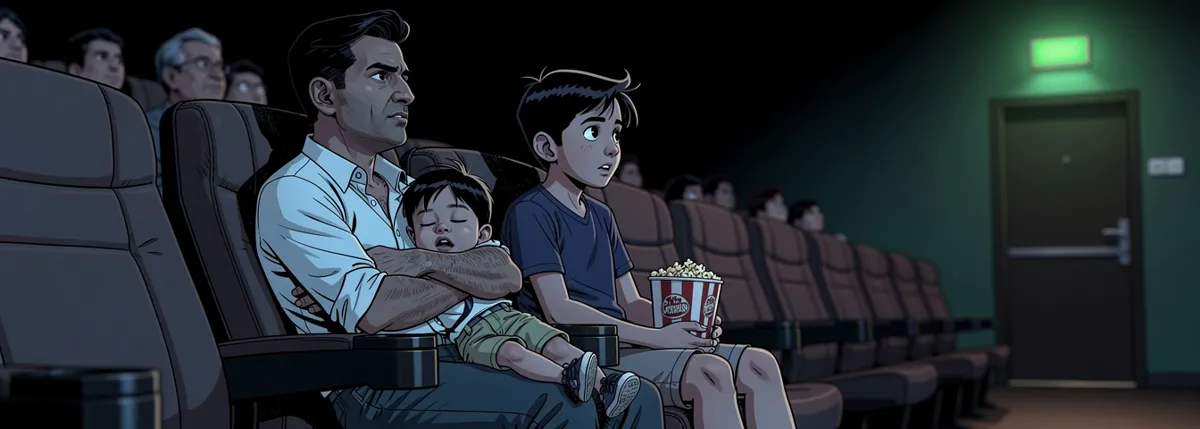
Saturday. A film. Forty minutes in.
Veer was asleep on Papa’s arm. Dhruv had stopped watching. He was counting the small green lamps over the doors. There were four.
“Papa,” he whispered, “can we go?”
“We paid for three tickets,” said Papa. “We are sitting through it.”
So they sat through it. The film did not get better. It got longer.
On the way home Dhruv turned it over. What did the tickets have to do with the next hour?
The idea
People who study choices have a rule for this.
The idea
Spent money/time must not steer the next choice.
Here is what each word means, in the cinema.
Spent means already gone. Paid, sat through, used up. The tickets were spent at six. The forty minutes by seven.
Now draw a line at now. The tickets and the forty minutes are behind it. Nothing Dhruv does next brings them back across.
The next choice is only what is ahead of the line. The rest of the film, or the evening outside. Two doors. Neither has the tickets in it.
Steer means push the choice one way. The tickets cannot. They are in the same place whether the family stays or leaves. A thing that is the same behind both doors cannot tell you which to take.
So pick the door by what is through it. Only by that.
And what is ahead counts in full. A piece to play. A paper at the end of a course. Those are still to come.
What people believe instead
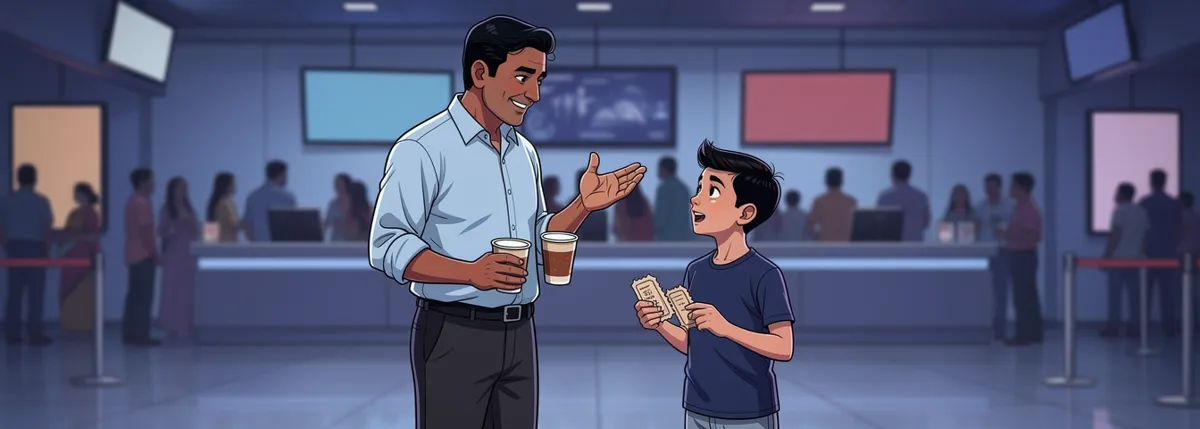
At the interval Papa bought two cold drinks. “We have come this far,” he said, and smiled. “We paid for three tickets. We are sitting through it.”
Dhruv did not argue. The money was real; leaving felt like waste.
But look where Papa was putting the tickets. Inside the stay door. As if staying kept them.
They were not in the door. They were behind the line. Staying did not bring them back. Leaving did not lose them. Gone either way.
The same shape, twice more
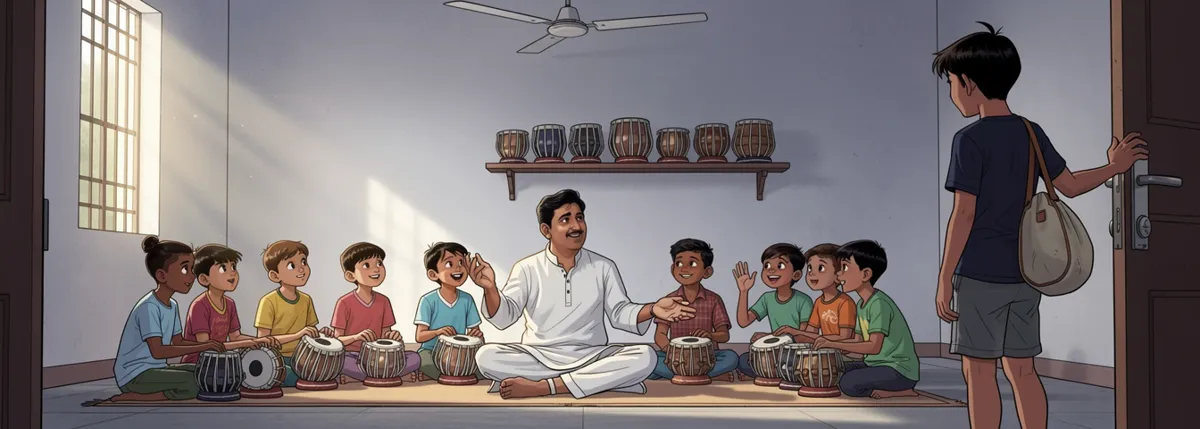
Dhruv joined tabla class in June. Mummy paid the fee for three months on the first day.
By August, Saturday mornings had turned heavy. Guru-ji was strict. And the two months done sat on him like a weight. I can’t stop now. Not after two months.
So he drew the line. Behind it: two months, and the fee. Ahead, through one door: the group piece for the annual day. Through the other: free Saturdays.
He went on. Not for the two months. For the piece.
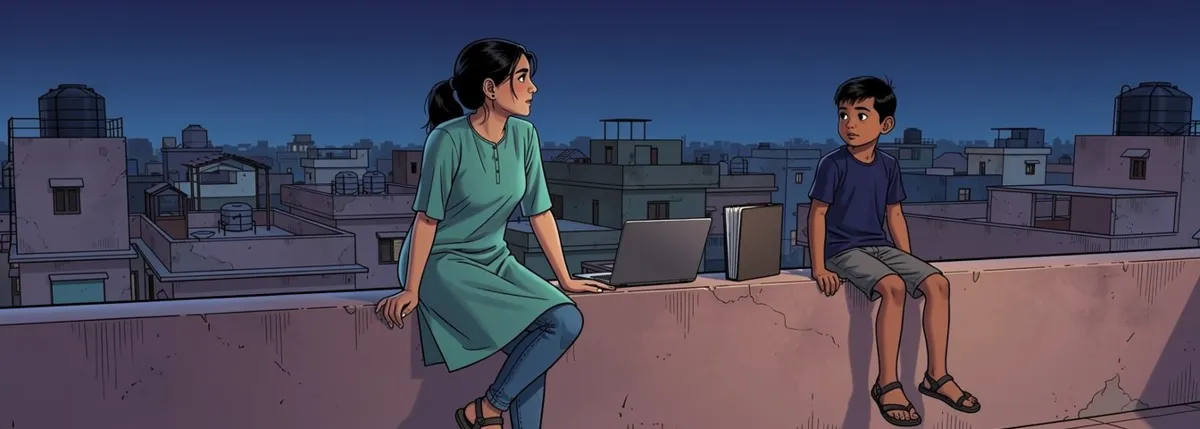
Priya didi was two years into a three-year course. She did not like it. Everyone said the same thing: two years, beta, you cannot leave now.
Dhruv drew her line on the parapet with his finger. Behind it: two years. Ahead, through one door: one more year, then the paper. Through the other: starting again.
“The paper is ahead of the line,” he said. “So it counts. The two years are behind it. So they don’t.”
Priya didi laughed and did not answer. She has not decided. But she is looking at the right side of the line now.
Spot it
1
A game on the phone. You have played for an hour and it is no fun now. “But I got so far.” Which door?
2
A book from the station stall, half read, and you do not like it. “But I paid for it.” Which door?
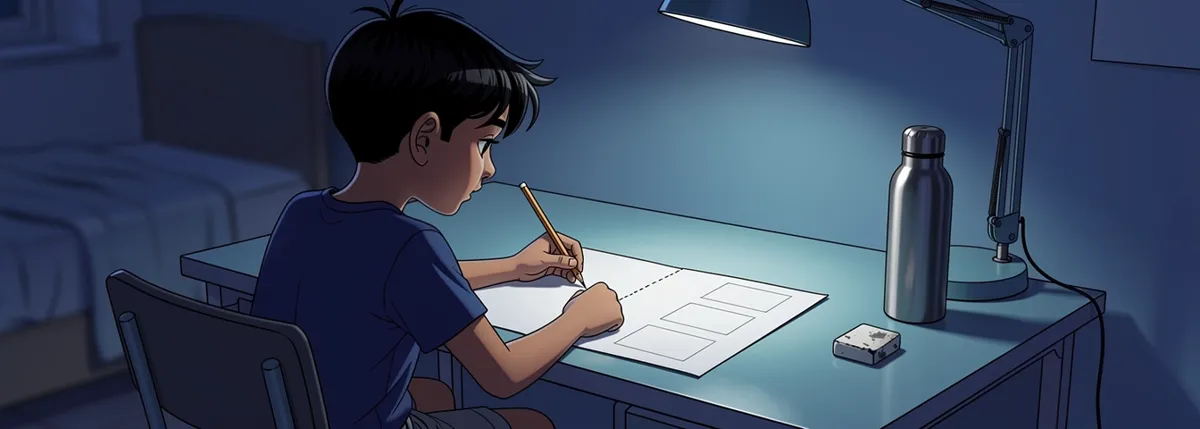
That night Dhruv drew the line on paper and put the ticket stubs to the left of it. Then he ran his test. If the tickets had been free, would we have stayed?
No. Nobody stays for a free boring film.
So the tickets were steering.
Here is the move. When something you started stops being worth the rest of the time, draw the line at now. Put what is spent behind it. Ask only what is ahead.
This week, at home
Find one thing you are doing only because you already started it. Draw the line. What is behind it? What is ahead?
The same line, three costumes
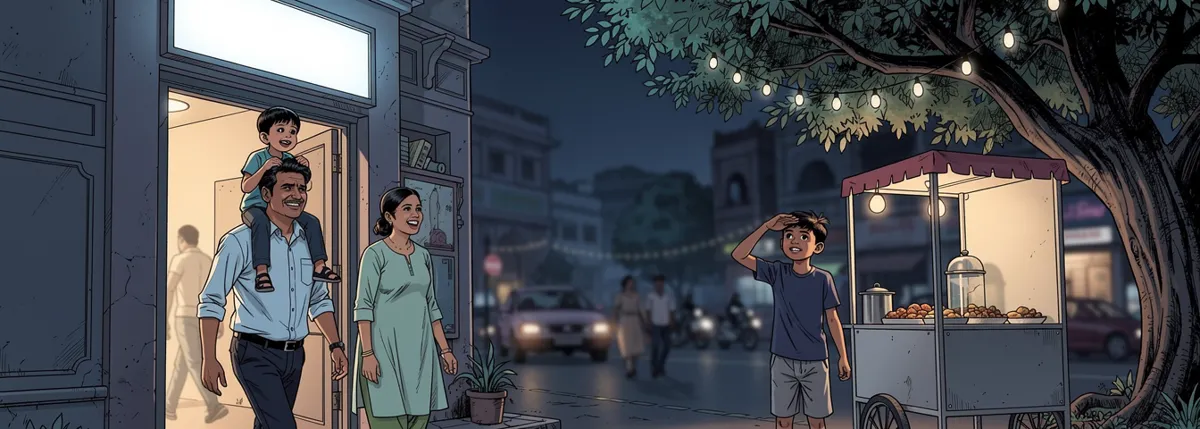
The next month there was another film. Twenty minutes in, Veer was asleep again. Papa looked at Dhruv. Dhruv looked at the green lamp. “Behind the line either way,” said Papa. And they went out of the side door into the evening.
The film, the class and the course are one shape. Something spent. A line at now. Two doors ahead of it. They left the film, because the rest was not worth the hour. Dhruv went on with the class, because the piece was. What was behind the line never came into it.
Dhruv thought of Uncle Dignaga, who liked to ask what kind of thing a thing really was. What kind of thing is a paid ticket? Papa treated it as a thing at stake: stay and keep it, leave and lose it. But a spent ticket cannot be kept or lost any more. It is only a thing that was. So it came off the list. Only the next hour was left on it.
The name
People who study this have a name for what is behind the line. They call it a sunk cost.
Sunk: gone under, like a stone dropped in a well. Not coming back up. Cost: what was paid, in money or in time.
A sunk cost is real. And it is gone, and it is the same whichever door you pick. That is why it cannot steer.
Read the rule again. Spent money/time must not steer the next choice. The sunk cost is behind the line. The choice is ahead of it.
The words are new. The shape is not.
Where you will see this next
Next chapter: what you can move, what you can only nudge, and what you can only have an opinion about.