What the map leaves out
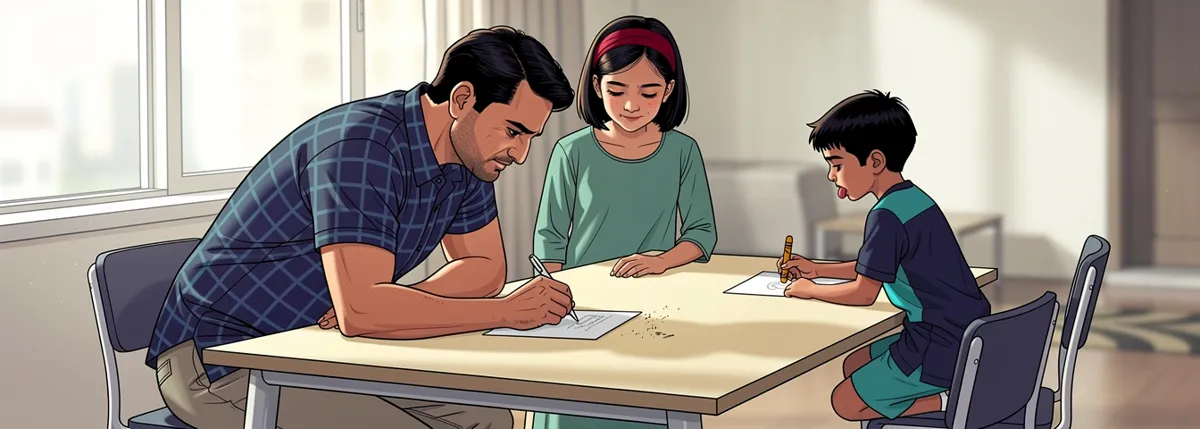
Rima was staying the weekend. On Sunday her father would come to fetch her, and he had never been to Priya’s street.
So Papa drew him a map on the back of an envelope. A petrol pump. A chemist. Their blue gate. A line for the road.
Bablu, who is eight, sat across the table drawing one of his own.
Priya walks that street every day. There is a lot more on it than that.
Papa’s map was not wrong. Rima’s father found the gate first time.
The idea
But the sweet shop is not on Papa’s map. The neem tree is not on it, or the dog, or the bus stop.
None of them fell off by accident. Papa left them out.
People who study this have one line for it.
The idea
The map is not the territory — every representation drops something, by someone’s choice.
Take it a piece at a time, starting with the long word.
A representation is anything made to stand for something else. A map is one. So is a photo, a video, or the story you tell at dinner.
Priya took a photo of the street from across the road. It has the sweet shop in it, and the neem tree. That is all that fitted inside its edges.
Every representation drops something. It has to.
A street is full of things, and paper is small. The city map at school shows Priya’s street as one thin line. No shop, no tree, no gate. That map had a whole city to fit.
And somebody decides what goes.
Bablu’s map has the sweet shop, the neem tree, the dog and the gate. Papa’s has the pump, the chemist and the gate.
Papa drew what a driver looks for. Bablu drew what he passes slowly on the way home. Nobody told either of them what to keep. They chose.
What people say instead
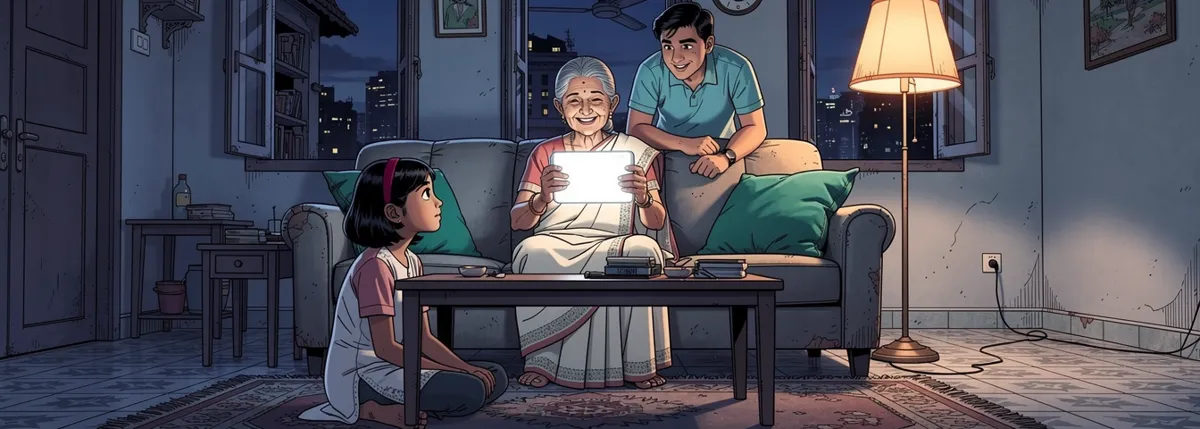
Kaku came back from a day trip to Digha with a video. Sun on the sand. Waves rolling in.
Dida watched it three times. “What a lovely day you had,” she said. “I saw it with my own eyes.”
She was happy for him, and every wave in the video was real.
Priya had heard about the rest of the day from Kaku on the phone. She did not say anything.
The bus left at five. It got a flat tyre. It rained, and then it rained more. The sun came out for a short while, and that is when Kaku filmed. Then the long bus home.
The video is true. It is not the day.
Two more
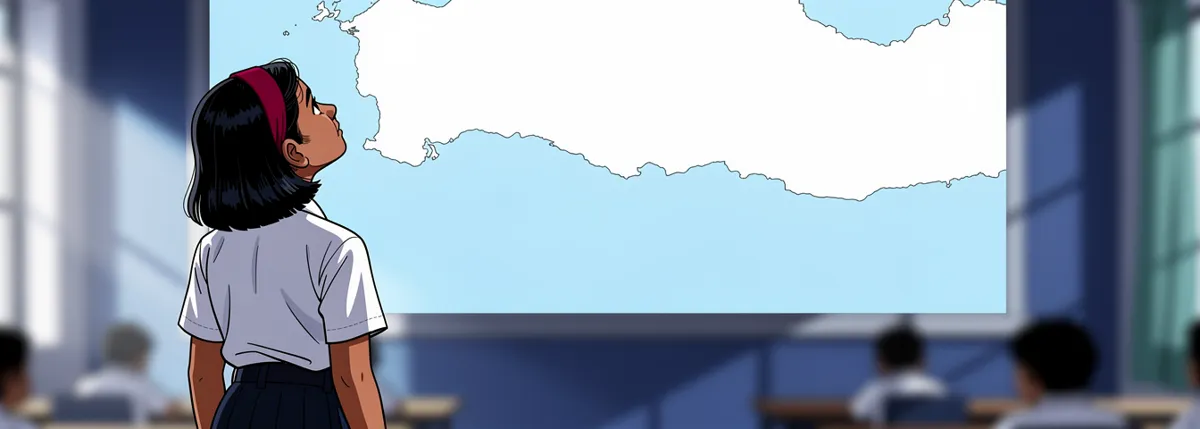
Priya’s classroom has a map of the world on the wall. Near the top is a huge pale island. On that map it looks bigger than India.
It is not. It is smaller than India.
The people who first made this kind of map wanted sailors to steer by it. To get that, they let the lands near the top grow. Somebody chose that.
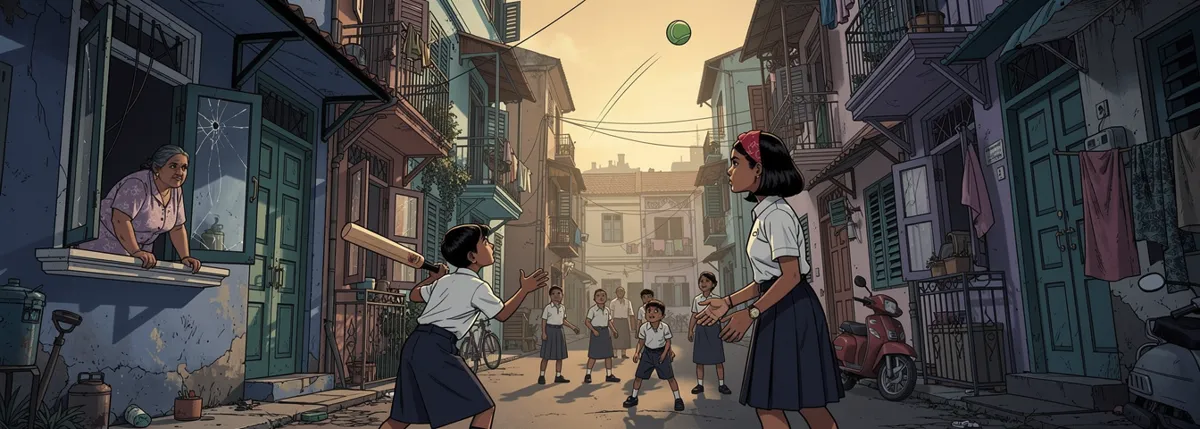
On Saturday the lane played cricket. Bablu hit a six. Then a ball went through Mrs Sen’s window. Someone took a long catch, and the lane won.
At dinner Bablu told it as the best match ever. His six, the catch, the win.
Mrs Sen told Dida about her window. For her, that was the match.
Both told the truth. Each kept a different part.
Spot it
Here are two maps of one road. Ask them what Priya asks.
1
The first map is the board at the bus stop. The second is the little map printed on a wedding card. What did the bus board leave out?
2
Side by side, the two maps hardly look like the same road. Why not?
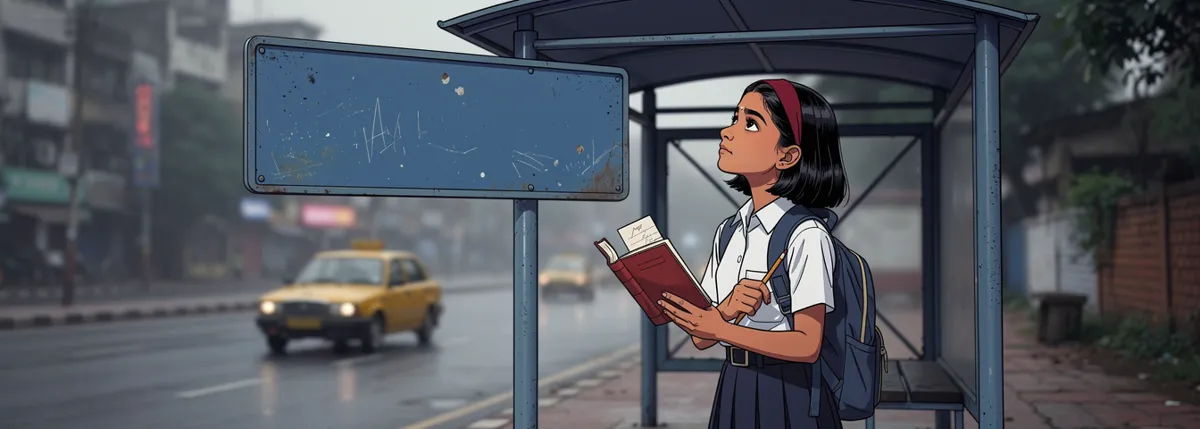
Priya keeps a notebook with a red spine. On the left page she puts a thing she has seen. On the right, her question about it.
One road, two maps
Here is the road. The bus board kept the stops and left out the rest: the hotel, the hall, the pond. The wedding card kept the hotel and the hall. Neither kept the pond.
That is why they look like two roads. Two people drew one road, and each kept different things.
Think back over the chapter. Papa’s map, Bablu’s, the photo, the city map, the video, the wall map, two tellings of one match. Every one dropped something. Every time, somebody chose what. None of them was lying, and none of them was the whole thing.
So when a map, a photo or a story reaches you, ask two things. Who made it? What did they leave out?
This week, at home
Ask two people at home to draw you the way to the nearest market, without looking at each other’s. Put the two side by side. What did each one keep? What did both of them leave out?
Dida had a story about Brahmagupta, who long ago made tables that said where the moon would be each night. When the sky and his tables did not agree, he did not argue with the sky. He went back and changed the tables. Priya thought: a map is a kind of table. When it and the street disagree, believe the street.
The name
People who study this say it in six words: the map is not the territory.
The territory is the real thing. The whole street, the whole day, the whole match. The map is what somebody made of it.
A map can be very good. Papa’s was. It still is not the street.
Priya still loves maps. She just looks at the street as well.
Where you will see this next
Next chapter: one fact can wear different words, and the words change what people do.