Sideways, not down

On Friday evening Mummy held out her phone. “Look at this,” she said.
It was a news page. It said the schools would close for the holidays ten days early. It had a logo, a photo of an empty classroom, and neat lines of news.
Rinku, Ananya’s cousin, is nine. He was already jumping on the sofa. “Ten more days of holiday!”
Ananya read the page top to bottom. Then she read it again. It looked like news. She still could not tell.
The idea
A third reading would not have helped. A fourth would not either.
People whose job is checking pages do something else. It fits in one line.
The idea
Lateral reading — open a new tab about the source; don’t read the page harder.
Take it a piece at a time, starting with the word source.
The source of a page is whoever made it. It might be a newspaper, a company, or one person with a new account. Some sources have been around for years. Some started yesterday.
A page can say anything about itself. Who made it is a different question. The page cannot answer that one.
So reading harder does not help. A made-up page can have a logo, a photo and tidy lines. So can a real one.
Ananya opened the real newspaper’s page. Read top to bottom, it looked just the same.
So leave the page. Open a new tab, and read what other pages say about whoever made it.
Ananya opened two tabs. A checking page listed the holiday site as one that makes up news. The real paper had a note of its own: that site is not us.
People whose job is checking pages do this. They leave a page sooner than the rest of us.
What people say instead
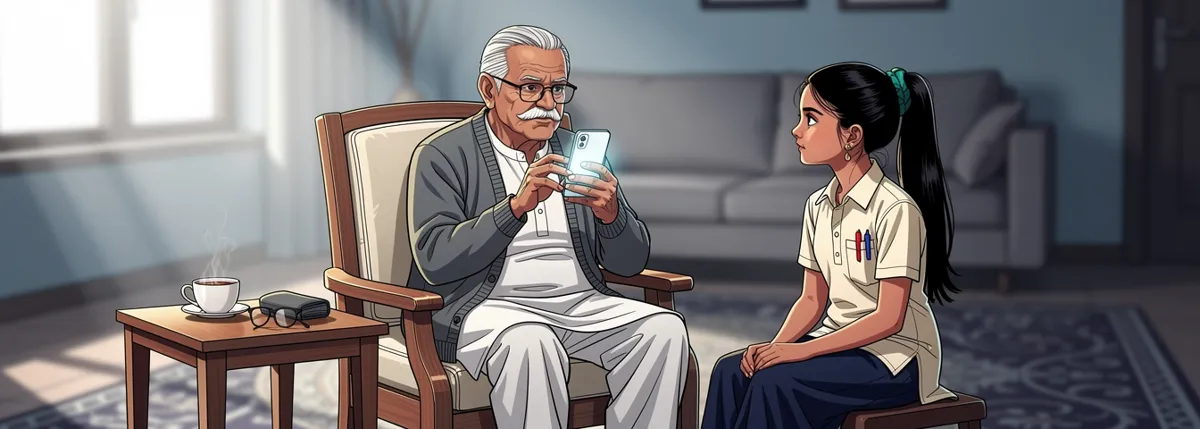
Dadaji’s knees hurt on the stairs. On his phone he found a page selling an oil for knees. It said the pain would go in three days.
The page had a photo of a smiling man, and words like “tested” and “natural”. Dadaji read every word, slowly, with his glasses on. Then he read it again.
“I read it all, twice,” he said. “A careful reader can tell.”
He is a careful reader, and that is a good thing to be. Ananya did not argue.
Later, Ananya opened three tabs about the company. Two warned about it. The third, a list of doctors’ advice, did not mention it at all.
Reading carefully finds what a page says about itself. It cannot find the rest.
Two more

Sideways can say yes, too.
On Tuesday a page from the weather office warned of a hailstorm by evening. Mummy asked Ananya to check.
She opened three tabs. The newspaper had the same warning. So did the school’s page, and the radio’s page. Every tab said yes, so Ananya believed the page.
By four o’clock the washing was in. By five, the hail came.
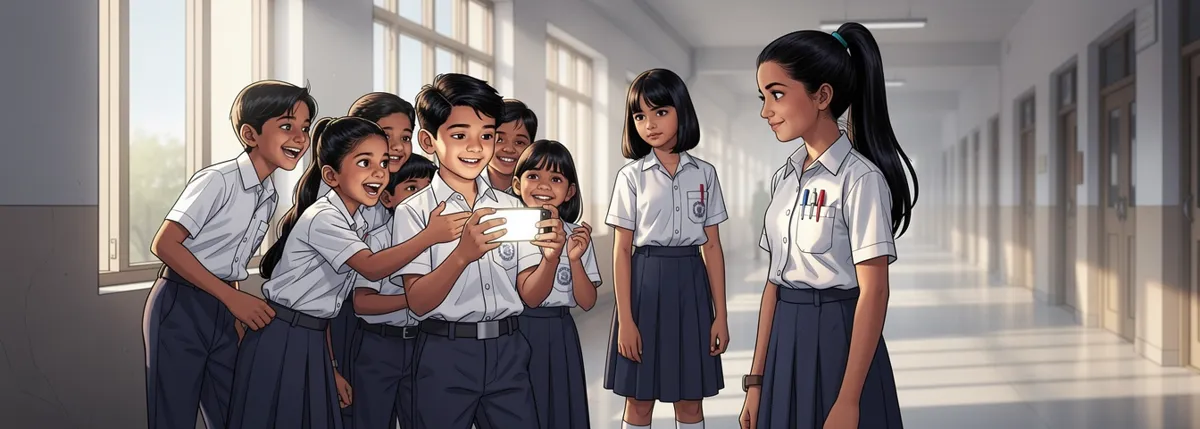
On Wednesday the class crowded round one phone. A new account said a famous cricketer would visit the school on Friday.
Simran wanted it to be true. So did Ananya, a little. The account had a photo of him in a cap. It had started the week before, and it had one post.
She opened two tabs. A cricket news page said nothing about it. The school’s own page said nothing either.
Nobody else had heard of it. That is an answer too.
Spot it
Now you try. Rinku has found a page.
1
The page says the city zoo will let children in free all next week. Rinku read it three times. He says it looks real. Ananya opened three tabs about it. What would a tab need to say to make you believe the page?
2
What if a tab says nothing at all about free days? Is that good news for the page, or bad?

Ananya reads her books slowly, with a blue pen and a red one. A page on a screen, she has started reading another way.
3
Before you turn the page, guess what each tab said. Yes, no, or nothing? Write your three guesses down.
Three tabs, one zoo
Here is what the tabs said. The zoo’s own page said nothing about free days. Neither did the newspaper. A checking page warned that the free-zoo page is not from the zoo at all.
Two tabs said nothing, and one warned. Rinku is not going on Monday. He is going on Sunday, with a ticket.
Think back over the chapter. The holiday page, the oil, the storm, the cricketer. Each time, reading the page again told Ananya nothing new. A tab about who made it told her a lot. Sometimes it said no, sometimes yes, and sometimes nothing.
So before you believe a page, or tell anyone what it says, open a second tab. Read about who made it. The page will still be there when you come back.
This week, at home
Find one page or post with news on it. Before you read it twice, open two tabs about who made it. What did each tab say: yes, no, or nothing? Then tell someone at home what you found.
Dadaji tells a story about Kumarila, a debater long ago who never let anything go. In his day, the two people arguing never decided who had won. People sitting outside the argument decided. “You do not get to judge your own case,” Kumarila would say. Ananya thought: a page cannot judge itself either.
The name
People whose job is checking pages call this lateral reading. Lateral means sideways.
Reading down a page reads the page. Reading sideways reads about it. For a page you are not sure of, sideways is quicker.

Ananya still reads her books slowly, every word. A page on a phone, she reads sideways.
Where you will see this next
Next chapter: something everybody shares, and why it can run out when each person takes only a little.