The same water
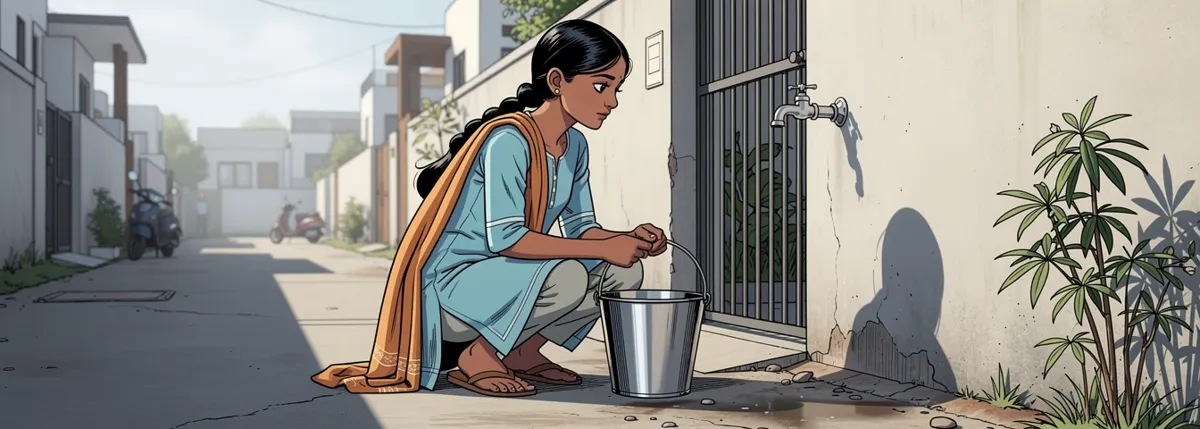
Five houses stand on Bhavisha’s lane in Pune. Each has its own borewell. All five pull from the same water, deep under the lane.
In April the Deshpandes put in a bigger pump. It made sense. Their tank filled in half the time.
In May the Kulkarnis did the same. Then the Shaikhs, then the Pawars, then Bhavisha’s own father.
By the end of May, every tap on the lane ran dry by ten in the morning.
Each house did what made sense for it. The lane ran dry anyway.
The idea
Nobody on the lane was careless. Nobody wanted the water gone.
People who study this have one sentence for what happened.
The idea
Individually rational moves sum to collective loss; structure rescues cooperation.
It is a long sentence. Take it in three pieces.
Individually rational means sensible for the one who does it.
Stand inside one house and look out. If the others pump the usual, a bigger pump gives you more.
If the others pump more, keeping the old pump leaves you with least of all.
So from inside one house, the bigger pump looks right either way.
Sum to collective loss means: add all the sensible moves together, and everybody loses. Collective means all of us at once.
The water under the lane was not five lots. It was one lot, and every pump pulled on it.
So when all five pumped more, each got less than before. The Deshpandes too. Their bigger pump bought them nothing in the end.
What changed it
The last piece is the hopeful one.
Cooperation is holding back together. Structure is anything built around people that changes which move makes sense. A rule, a turn, a count, a check.
In June the lane met on the Kulkarnis’ steps. They agreed that each house would pump on its own two days a week.
Aaji wrote the days on a board and hung it on the gate. Every house passes it twice a day. Pumping on somebody else’s day would be seen by everyone.
By July the taps ran till evening.
What people say instead
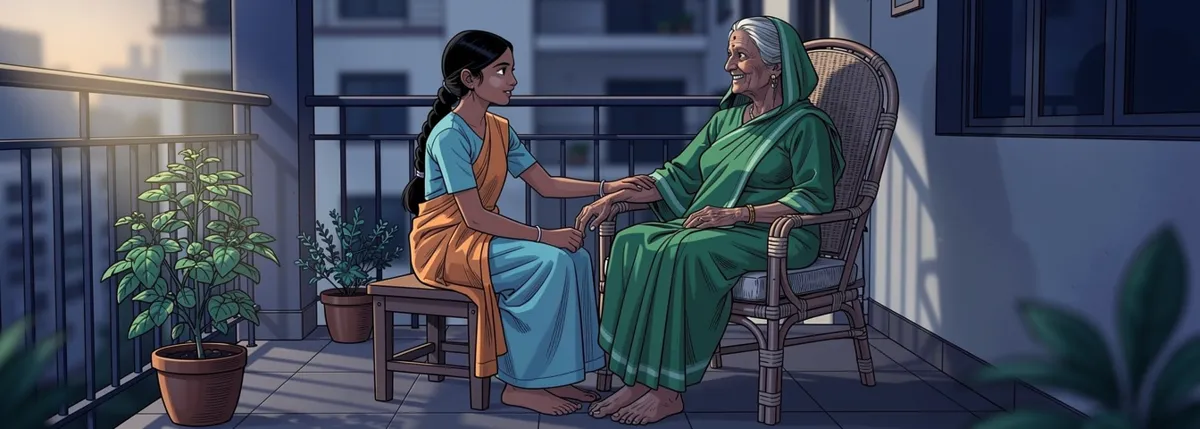
Back in the dry week, Bhavisha had asked Aaji why people did not just pump less.
Aaji patted her hand. “Beta, people are like that. Everyone looks after their own bucket.”
She was not being unkind. She has seen a great many summers.
Bhavisha did not argue. She had been glad of the bigger pump herself.
Two more places
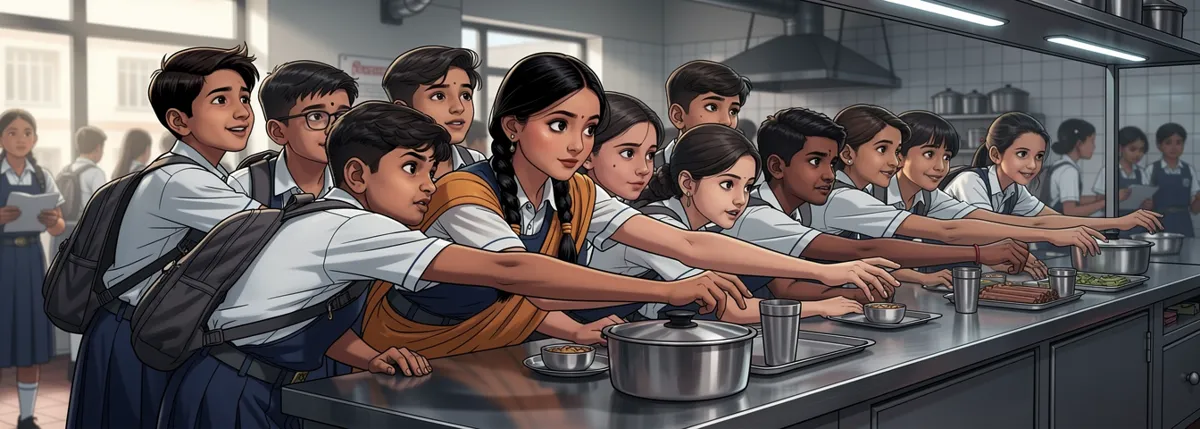
The same shape turned up at school.
The canteen had no line. Whoever pushed in got a samosa first, so everybody pushed. Bhavisha too.
Break is twenty minutes. Most of it went in the crush.
This term the canteen put up a rope and gives everyone a token. The line takes five minutes now.
Then there was the science chart.
Four of them had one chart to make. Each one thought: the others will do it, and I keep my evening. Each was right about the evening.
The night before it was due, the chart was still white.

The next time, their teacher had them write one name on each part before they began. It was done in two evenings.
Spot it
One more place. Look at it the same way.
1
Four coaching batches near Bhavisha’s school. One starts staying an hour late, to get ahead. Then the others do the same. Did anybody get ahead?
2
What have all four lost now? And what could the four of them agree on, to get it back?

Bhavisha keeps a long paper scroll. She lays two things side by side on it, to see whether they are the same problem.
One shape, four places
Nobody got ahead. Each extra hour made sense for the batch that stayed. Together they took every family’s evenings.
What could give them back is a thing like the board on the gate. All four agree to end at six, and say so where everyone can see. Then no batch gains anything by staying.
The lane, the canteen, the chart and the batches are one shape. Each person makes the move that makes sense for them. It adds up to a loss for all. Something built around all of them changes it.
Nobody in any of the four was a bad person. They held back as soon as holding back made sense. Each place needed its own board: the rope, the names on the parts, the six o’clock end.
This week, at home
Find one thing your home shares with other homes: a tank, a lift, a light on the stairs. Ask how it is shared. Is there a rule, a turn or a check? Is it written down anywhere? What would happen on the day nobody kept to it? Ask someone older how it was shared when they were your age.
Bhavisha thought of Emperor Ashoka. He cut his rules into stone, beside the roads. Stone outlasts memory. Aaji’s board on the gate is a very small pillar. It works the same way: a rule that everybody can see is hard to quietly forget.
The name
When the thing everybody shares is water, grass or fish, they call it a commons. That is an old word for the field where a whole village grazed its animals.
When it is people each deciding alone, they call it a prisoner’s dilemma. The first puzzle like it was about two prisoners, each tempted to blame the other.
A dilemma is a choice where every way out costs something.
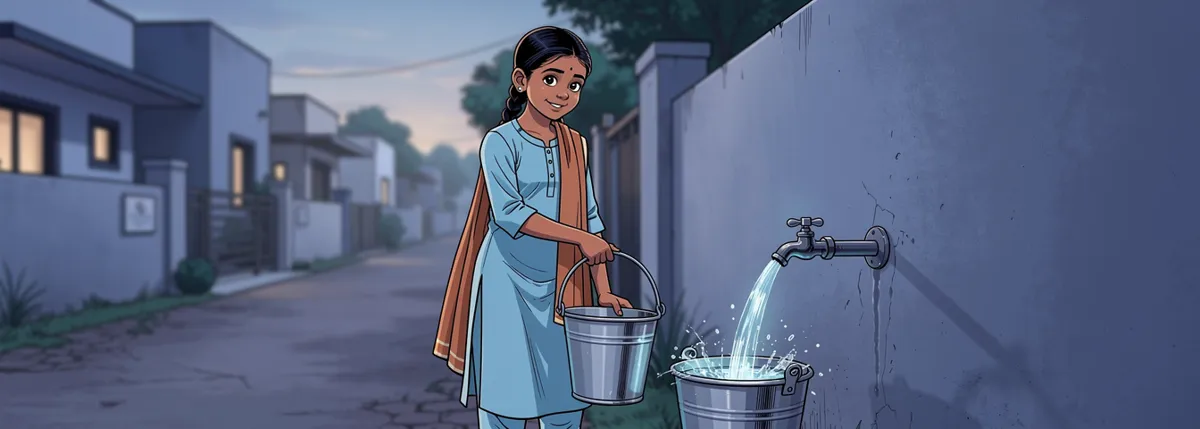
Nobody on Bhavisha’s lane became a better person. The board on the gate is new.
Now, when something shared runs out, she looks for what stands over everybody before she looks for somebody to blame.
Where you will see this next
Next chapter: two people arguing hard, who turn out to mean different things by one word.